Toddler Bed Design vs. Sleep Quality: 5 Science-Backed Factors
By Diego Ramos • 23rd Feb
When you're outgrowing a crib in a 650-square-foot apartment with a second kid on the way, you don't have room for trial and error. That's where toddler bed sleep science comes in, not as a marketing buzzword, but as concrete data on what actually moves the needle on nighttime sleep and daytime peace. The research is clear: a toddler sleeping in a crib reports fewer night awakenings, shorter sleep onset latency, and more consolidated sleep than one in a regular bed.[1] But here's what matters to apartment dwellers: once that transition happens (and the safety window allows), the design of the bed you choose determines whether sleep improves, stagnates, or tanks. If you're unsure whether your child is ready, review the toddler bed readiness signs first.
I learned this the hard way with a convertible crib frame I stretched to afford. Two years later, it resold in a weekend for 70% of retail, funding the next size up. A cheaper toddler bed we'd tried before? Curb pickup. That contrast taught me to price future value, not just today's deal, and to recognize that toddler bed sleep architecture isn't about aesthetics; it's about engineering better sleep in a constrained footprint. Over the next five factors, I'll walk through the design decisions that separate beds that pay dividends from those that become expensive mistakes.
1. Mattress Firmness: The Foundation of Sleep Consolidation
You can't optimize sleep if the foundation is wrong. Research on infants and toddlers shows that sleep consolidation (the ability to stay asleep in longer stretches) improves when a consistent bedtime routine is established.[4] But what's often overlooked is that mattress firmness is part of that routine's physical foundation. A toddler's spine is still developing; too-soft a mattress causes micro-arousals as the child shifts to find stable support. Too firm, and you sacrifice comfort.
From a total cost of ownership perspective, this is where off-brand mattress bundles hurt you. Many low-cost toddler bed packages include a 4-inch foam core that degrades within 18 months. You then face a choice: buy a replacement mattress (another $150-$250) or accept degraded sleep quality. Quality toddler beds pair with firmness-rated mattresses (typically 7-8 on a 1-10 scale) that maintain structure for 3-5 years. Spread that initial premium ($80-$120 more at purchase) across five years of nightly use, and the depreciation curve flattens.
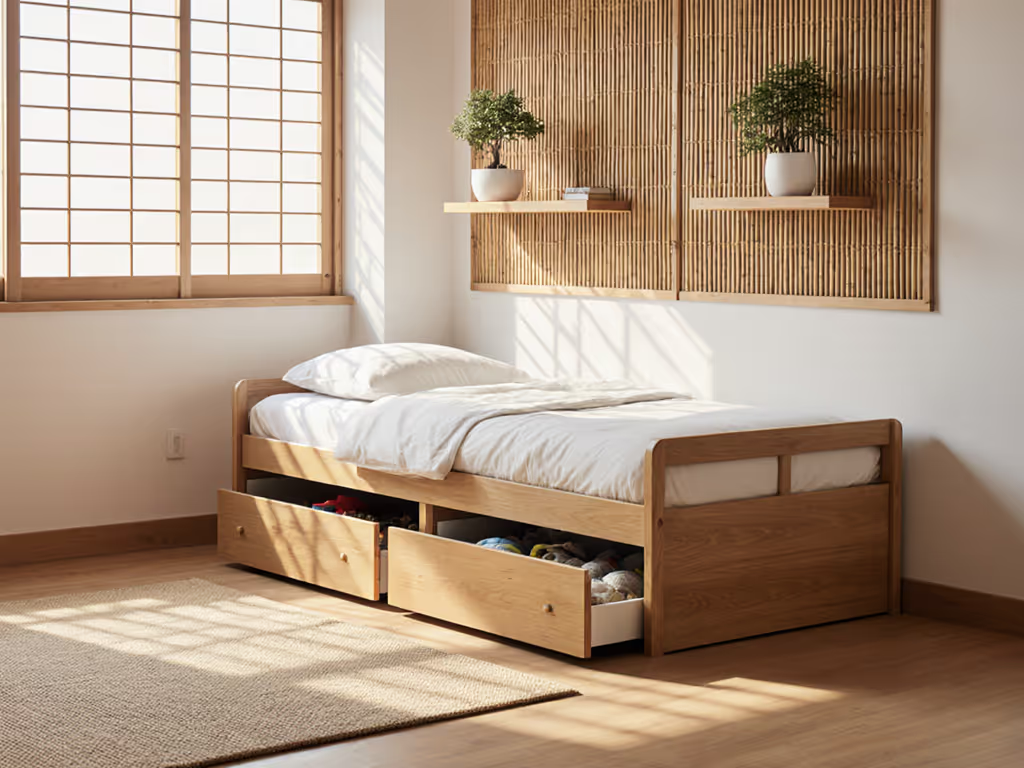
For small-space parents, this also matters for storage. Thinner, firmer mattresses clear more under-bed space for drawers or bins, a function-stacking win that reclaims square footage without adding furniture.
2. Guardrail Design: Safe Independence vs. Sleep Interruption
Guardrails exist for one reason: preventing falls. But poor guardrail design creates a secondary problem: they interrupt sleep cycles. A toddler who wakes at 2 a.m. and cannot independently exit the bed to find a parent becomes a problem sleeper. Conversely, a guardrail that's too low or unstable creates anxiety at bedtime, increasing sleep onset latency.[1]
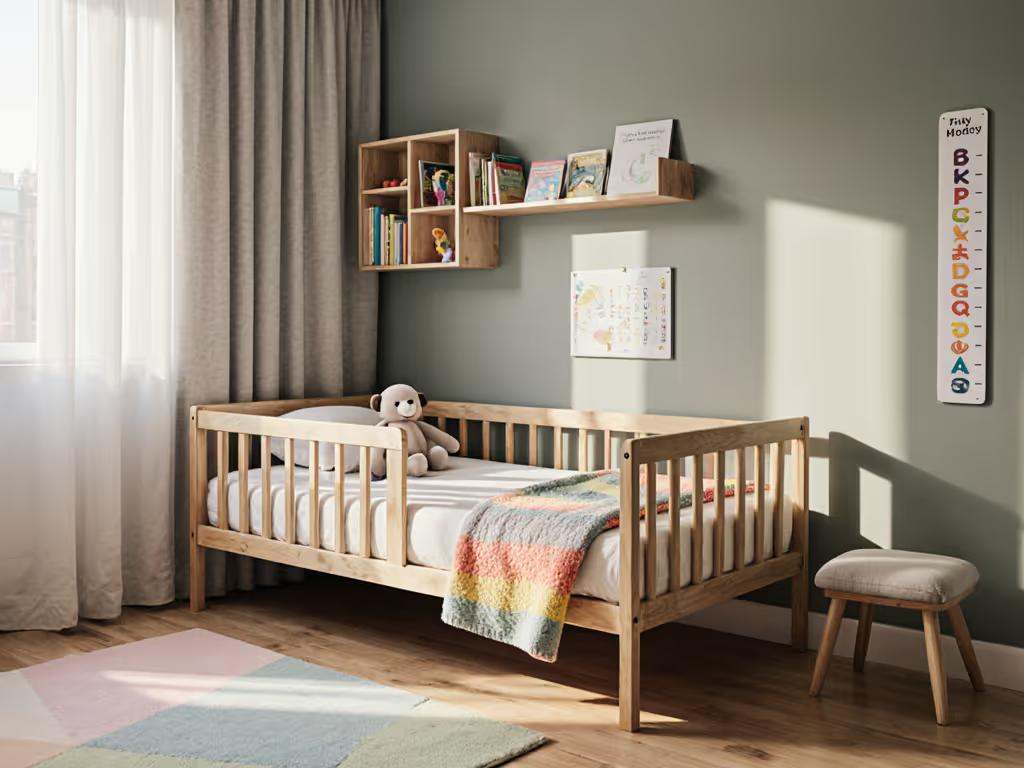
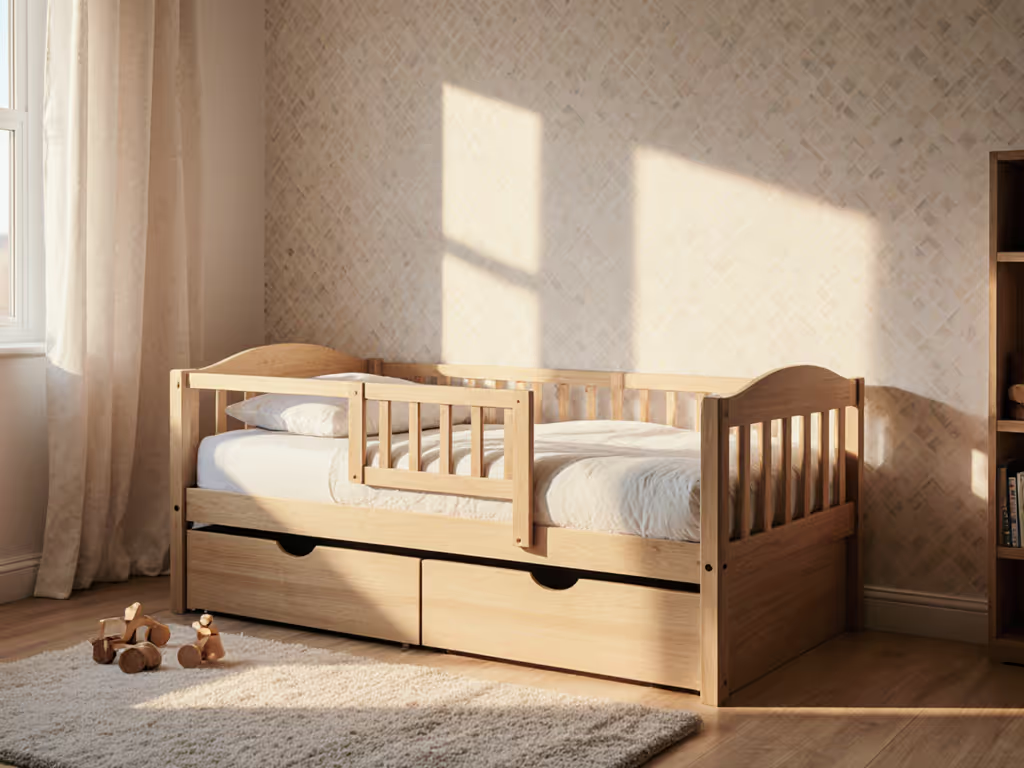
Here's what the evidence suggests: guardrails should be breathable (mesh or spaced slats, not solid wood) so they don't trap heat or create a cage feeling. Height matters: 7-9 inches above the mattress surface is the sweet spot, high enough to prevent rolls, low enough that a standing toddler can peer over and see the room. And crucially, they must be rigid. A guardrail that wobbles when a child grabs it creates micro-wake cycles throughout the night as the child instinctively checks stability before settling back down.
Brand-stable designs (those with published safety certifications and consistent specs across production runs) show lower depreciation precisely because guardrail reliability is transparent. A bed with sketchy reviews about wobbly rails will take longer to sell, and a buyer will sense the risk and lowball accordingly.
3. Bed Height and Room Fit: Clearance as a Sleep Facilitator
This factor surprises people, but it's crucial in small spaces: a bed that's too high or positioned poorly relative to doors, vents, and windows disrupts the visual sleep environment, which affects sleep onset.[4] Small-space dwellers know this intuitively: a cluttered room fuels overstimulation; an open, breathable room calms the nervous system before bed.
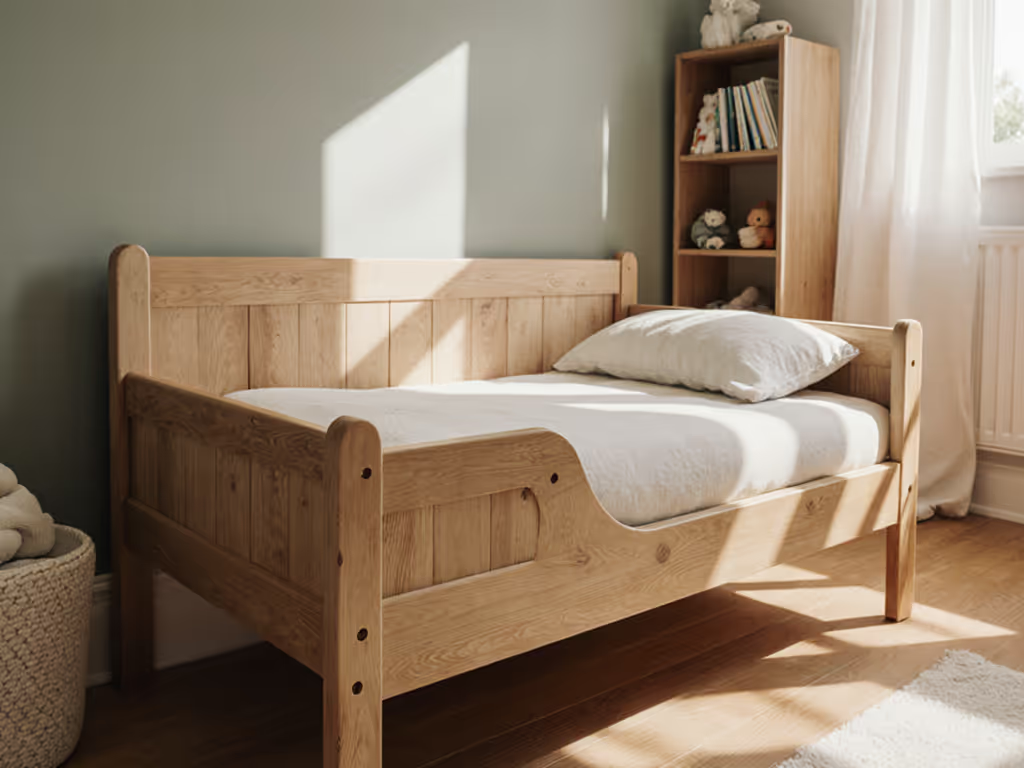
Scientific toddler bed design accounts for clearance. A toddler bed 10-12 inches off the floor (vs. a standard 20-inch twin) accomplishes three things:
- It maximizes under-bed storage space, eliminating the need for an extra dresser that further shrinks the room.
- It reduces fall distance and injury risk, lowering parental anxiety (which does affect child sleep; stressed parents transmit stress).
- It creates a visual profile that doesn't dominate the room, preserving the sense of space that fosters a calm bedtime routine.
When choosing a bed, measure your actual room. Will it fit with the door able to swing open? Is there clearance to the window for blackout curtains? Can you fit a small chair or stool for nighttime parenting without creating a tripping hazard? Beds that stack function, not dollars, answer these questions in the product spec sheet, not after you've assembled and realized it blocks the dresser.
4. Frame Stability and Acoustic Design: Creaks Kill Sleep
Here's a metric most reviews ignore: frame noise. A toddler rolling over onto a squeaky slat creates a micro-arousal. A child already prone to night wakings will wake further. And in a shared room (sibling situation), a creaky bed can trigger a chain reaction of awakenings across multiple kids.
Stability comes down to joinery. Budget frames use dowel-and-staple construction; they wobble and creak by month four. Mid-to-premium toddler beds use steel corner brackets and mortise-and-tenon joinery. The cost difference at purchase is $80-$150. Over three years of nightly use across two kids (if you resell it for the next child), that's $25-$50 per child per year. The sleep quality gain (fewer micro-arousals, fewer midnight calls) is worth it.
Slat design also matters. Hardwood slats (typically 1.5-2 inches wide, spaced 2-3 inches apart) distribute mattress weight without bouncing. Cheaper beds overspace slats or use thin plywood, both of which degrade under nightly pressure and create give, noise, and uneven mattress support.
In terms of resale, a buyer will immediately know if a frame is stable by feeling the bed rock slightly. A rock-solid frame signals durability and justifies a higher resale price, and you'll recover more of your original spend.
5. Convertibility and Modular Compatibility: Lifespan Economics
This is where I think about beds differently than most parents. A toddler bed isn't a one-phase purchase; it's a node in a longer value chain. A bed that converts to a daybed or twin extends from age 2 to age 8 or beyond. A modular frame that accepts add-on storage or can be repositioned as the room evolves pays dividends.
Research on low-income Beds for Kids programs found that provision of a proper bed (combined with a calm sleep environment) improved child sleep and reduced nighttime awakenings measurably.[5] But those programs don't replace beds every 18 months. They invest in durable, standardized frames that can serve multiple children across years.
Here's the financial math: a $600 convertible toddler-to-twin bed (if you use it across two kids and resell at 60-70% of retail, per my experience) nets out to $180-$240 sunk cost. A $250 non-convertible bed that you offload for $50 costs $200 and is gone. The convertible didn't cost more in real terms, it just looked more expensive at checkout.
Compatibility with standard mattresses and sheet sets matters too. A bed that only accepts proprietary 28x52 mattresses locks you into expensive replacements and makes resale harder. One that accepts standard crib or twin mattresses opens a secondhand parts market and makes future transitions cheaper.
Also ask: are guardrails removable? Can the headboard be swapped? Can you add a trundle later? Modular specs aren't just nice-to-haves; they're proof the designer thought about longevity, and products designed for longevity hold value better and sleep better across their lifespan because they're built to endure and adapt.
The Sleep-Science Takeaway
Toddlers in cribs sleep better than toddlers in beds, that's settled.[1][2] But if you're transitioning (and by age 3, you likely are), the design of the bed determines whether you gain sleep quality or lose it. Firmness, guardrails, fit, stability, and convertibility aren't nice-to-haves; they're the engineering of sleep itself. Every dollar saved on a cheap frame comes back as lost sleep, faster replacement, and poor resale value. Every dollar spent on durability, parts availability, and future-proofing compounds, and here's the real win: you sleep better knowing the bed will still be there, working quietly and reliably, when it's time to pass it on.
Your Next Step: Measure Before You Buy
Before you scroll through listings, do this: Measure your actual room. For tight layouts, compare toddler bed types for confined spaces before committing to a frame. Note the distance from door swing to the opposite wall, the window position, the vent or radiator placement, and whether a sibling will share the space. Then find three candidate beds and cross-check their specs against your real footprint. Look for published mattress compatibility and verified guardrail certifications. Finally, search the secondhand market (Facebook Marketplace, Craigslist, local resale sites) to see what those same models sell for after 2-3 years of use. That resale price tells you everything about perceived durability and design quality. Buy once, list once, sleep better in between.
Related Articles