

IKEA Tuffing Bed Review: Measured Fit for Small Rooms
By Maya Chen • 31st Mar
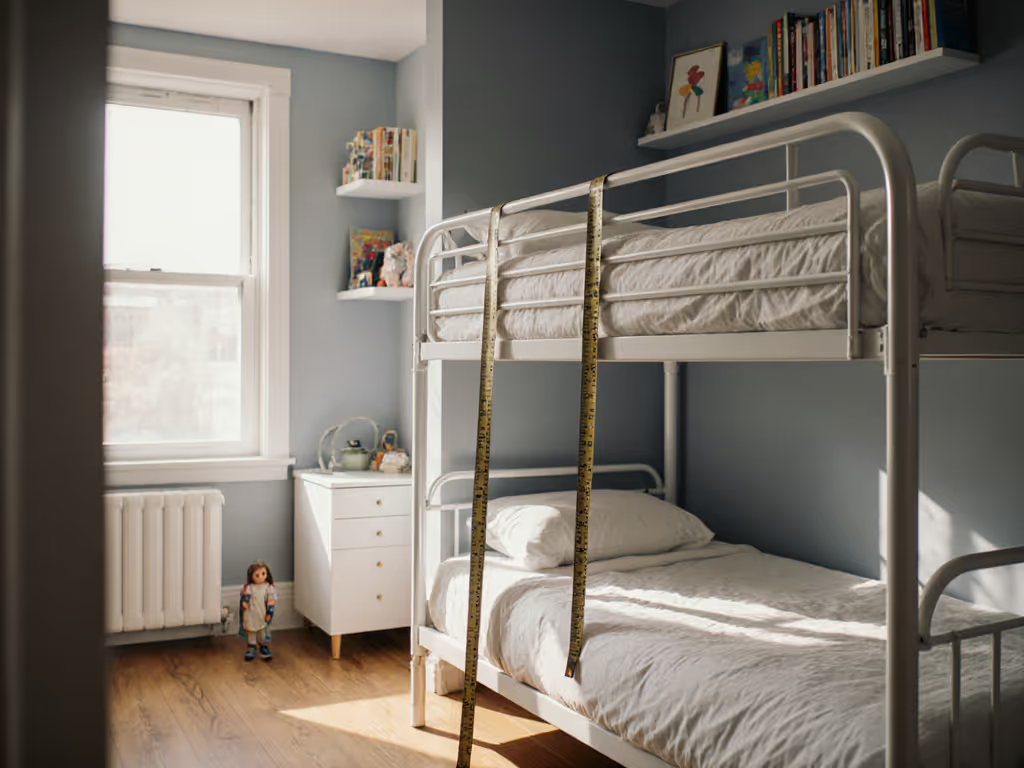
When a 90 sq ft bedroom houses a toddler, a dresser, and your need to open the door all the way, a standard bed frame isn't a choice (it's a constraint you must measure around). The IKEA Tuffing toddler bed review matters less as a product endorsement and more as a measurement-first case study: can this frame actually save your floor plan? After working with dozens of families in micro-apartments and shared rooms, I've learned that in small spaces, every inch should work twice. The Tuffing line offers two distinct approaches (bunk and loft), and the right choice hinges entirely on your exact measurements and nighttime path priorities, not glossy marketing claims. If you're still mapping the right category for your space, see our toddler bed types for confined layouts.
This guide walks you through how to evaluate both Tuffing models against your room, measure clearances that matter, and avoid the false economy of a bed that looks tiny in the store but swallows your toddler's sleep independence and your floorplan.
Why Tuffing Enters the Small-Space Conversation
The Tuffing line exists because IKEA designers understood one real problem: two sleeping zones on a small footprint, with enough headroom to see your child safely and a low enough profile to coax a toddler up and down without becoming a nightly safety negotiation.
IKEA markets Tuffing as a cost-efficient metal frame that "frees up square metres on the floor for playing and other activities." That's true only if you measure before you buy. The frame itself is steel with polyester-wrapped guard rails (not solid wood), which reduces weight and cost but means the footprint savings are real, not visual trickery. A centered ladder design (not offset) supports the small-space logic: your toddler climbs in the middle, and you can position the bed against any wall without worrying about ladder swing eating up additional floor area.
But here's the trap: both the Tuffing bunk and loft come in the same footprint width. The height is where they diverge, and that height choice determines whether you're reclaiming floor or just rearranging the clutter.
Tuffing Bunk Bed: Exact Measurements and Clearance Reality
Dimensions: 207 cm (L) × 96.5 cm (W) × 130.5 cm (H)
(Or in feet: roughly 6 ft 9 in. long, just under 3 ft 2 in. wide, just over 4 ft 3 in. tall.)
The bunk stacks two sleep surfaces vertically. This is where you must stop and tape out your room.
Space Between Beds and Guardrail Clearance
The distance between the top and bottom sleeping surfaces is 84 cm (about 2 ft 9 in.). This matters because your child needs headroom to sit up on the top bunk without bumping their skull, and you need to see them from the doorway. A toddler under four is typically still in pull-ups at night; you'll be leaning in to check, to change sheets after an accident, to comfort them. With 84 cm of vertical clearance between the mattresses (assuming a standard 11 cm mattress), your toddler has roughly 73 cm of usable height when sitting upright. That's tight but workable for ages 18 months to 3.5 years; beyond four, it becomes cramped. Review the 5-inch guardrail rule to verify safe rail heights and mattress thickness on any bunk setup.
The height under the furniture is only 14.5 cm (about 5 3/4 in.). Do not expect rolling storage bins. This under-bed space cannot accommodate shoes, drawers, or a trundle. It's purely a visual gap, and in tight layouts, that gap can actually hurt: it makes the frame feel hollow and visually light, which some families find calming and others find unstable-looking. (My bias: I prefer visual weight in low-profile frames, it reads safer.)
Weight Limits and Material Durability
Each sleeping level supports a maximum of 100 kg (about 220 lbs). This covers a toddler plus one adult (for bedtime cuddles or co-sleeping rescue), and extends into early elementary school years. The steel frame with welded joints passes IKEA's safety certifications, the same standard applied to their full bunk range.
One practical note: metal frames can amplify noise. For tips on dampening creaks and vibrations, read our quiet toddler bed materials guide. A moving toddler, a creaky mattress, or a sibling stirring below can wake the top sleeper. You'll want a quality foam or innerspring mattress (not a thin crib pad) to dampen vibration.
When the Bunk Wins
Choose the bunk if your room is 11-13 sq meters (120-140 sq ft) or smaller and you need two sleep zones right now (new sibling arriving, shared room, returning the crib). The bunk's modest 130.5 cm height leaves nearly 1.2 meters of wall space above it for shelving, a growth chart, or (more likely) nothing, which keeps the visual weight low and prevents the room from feeling stuffed.
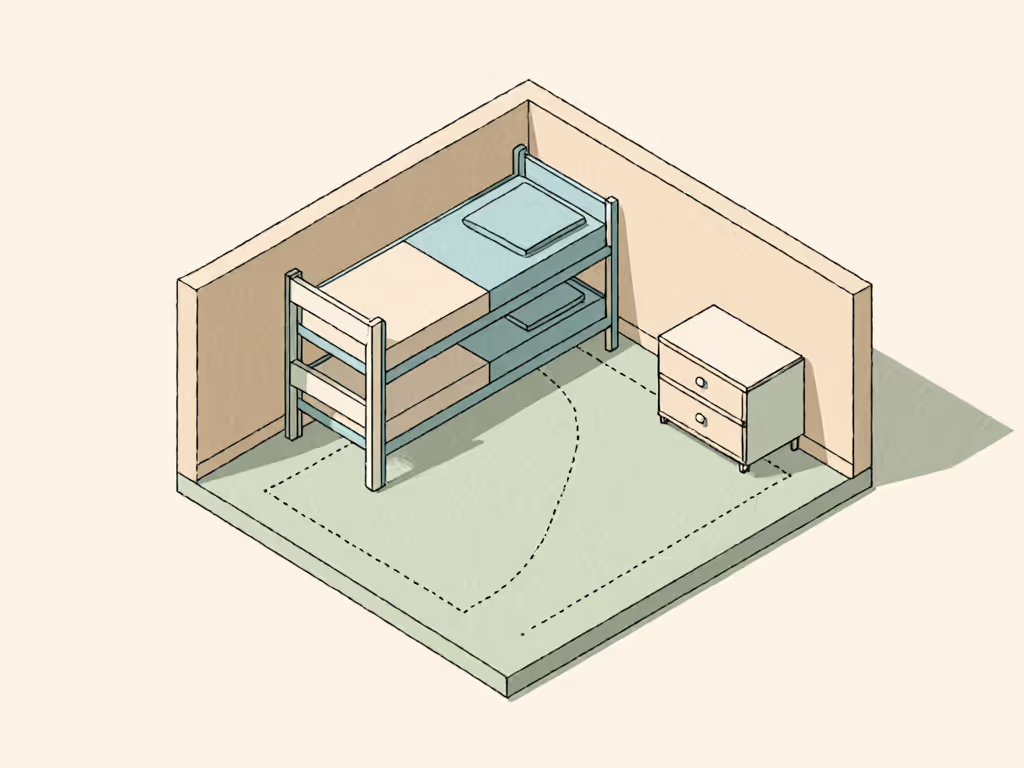
The centered ladder makes a corner placement possible. Tape a 207×96.5 cm rectangle in your target corner, then walk through your nighttime path: can you navigate to the bathroom without shuffling sideways? Can you open the dresser? Can a parent sit at the foot of the bed without their knees touching the opposite wall? If yes, the bunk reclaims floor in a way that a two-single-bed setup cannot. For multi-kid rooms, see shared room layouts for toddler beds to plan clear paths and sleep zones.
Tuffing Loft Bed: Vertical Storage as Strategy, Not Afterthought
Dimensions: 208 cm (L) × 97 cm (W) × 179 cm (H)
(Roughly 6 ft 10 in. long, just under 3 ft 2 in. wide, just under 5 ft 10 in. tall.)
The loft stacks the sleeping surface high, leaving the space underneath open for storage, a reading nook, or a desk. This is where the sleep-to-storage ratio equation changes.
Height Under the Loft: The Storage Multiplier
The space below the loft bed is 145 cm tall (roughly 4 ft 9 in.). This is enough clearance for a rolling dresser, a low toy shelf, even a small bookcase without touching the mattress above. Unlike the bunk (with its 14.5 cm void), the loft's 145 cm underbelly transforms small rooms by doubling the functional use of a single footprint.
Imagine a 12 sq meter (130 sq ft) room: bunk eats 2 sq meters, loft eats the same 2 sq meters. But under the loft, you've just recovered usable height for a dresser that would otherwise sit against the opposite wall, eating another 1.5 sq meters. The floor plan math becomes: loft saves 1.5 sq meters of floor by moving storage vertical.
This is where I tell the Tuesday story: on a site visit in a one-bedroom with a toddler and newborn, a parent swore nothing else could fit. We taped out a low loft frame, slid a rolling drawer underneath, pivoted the dresser to an adjacent wall, and suddenly (a clear nighttime path from the door to the changing table). The room didn't grow; it opened. The toddler napped that afternoon. Space wasn't added; it was reclaimed, inch by inch.
Assembly and Real-World Testing
The Tuffing loft weighs more than the bunk and comes in multiple packages. Assembly is reported by families as one of the more labor-intensive IKEA projects, not because the instructions are unclear, but because you're building a taller structure with more connection points. Budget 90-120 minutes and recruit a second adult for stability during assembly. The metal frame requires no special tools beyond the Allen key provided.
Once built, wobble is minimal if all bolts are tightened fully; a test shake from below should produce no movement. If it rocks, re-check every joint.
Fall Risk and Toddler Independence
The loft's height (5 ft 10 in.) looks tall from floor level. Your toddler is sleeping roughly 145 cm above ground. This is not a crib replacement for a tentative sleeper or a child prone to rolling. The loft suits toddlers 3+ years who have a track record of staying put, using a central ladder with confidence, and understanding a basic boundary ("stay in bed until sunrise").
For ages 18-24 months, the loft introduces unnecessary risk. For ages 2.5-3, it depends on your child's coordination and impulse control, not age alone. Many families use the loft for a 4-year-old attending preschool and already sleeping in their own bed reliably.
The metal frame is more rigid than wood, but that also means: monitor the guardrails regularly. The polyester wrap can tear if a toddler pulls hard; replacement kits aren't always in stock, and a damaged rail is a safety hazard until fixed.
When the Loft Wins
Choose the loft if:
- Your room is 13-18 sq meters (140-195 sq ft) with ceiling height of at least 2.4 meters (8 ft).
- You need to maximize storage density without a separate dresser.
- Your toddler is 3.5+ years old with proven bed-staying skills and ladder confidence.
- You plan to use the space under the loft for a functional second zone (reading nook, toy storage, changing table).
- Your budget permits the loft and rolling storage to fill that space (otherwise you've wasted height).
Step-by-Step Comparison: How to Choose
Step 1: Measure Your Ceiling Height
Use a tape measure. A loft requires minimum 2.4 meters (7 ft 10 in.) of vertical clearance from floor to ceiling, to allow 179 cm for the frame plus at least 25 cm of air gap between the mattress and the ceiling (toddlers toss, roll, and reach). If your ceiling is lower (many older apartments are 2.35 m or less), the loft's sleeping surface will be dangerously close to the ceiling, making the bed feel claustrophobic and reducing safety headroom. Stop here. Choose the bunk, which requires only 130.5 cm (4 ft 3 in.).
Step 2: Measure Your Floor Footprint and Door Swing
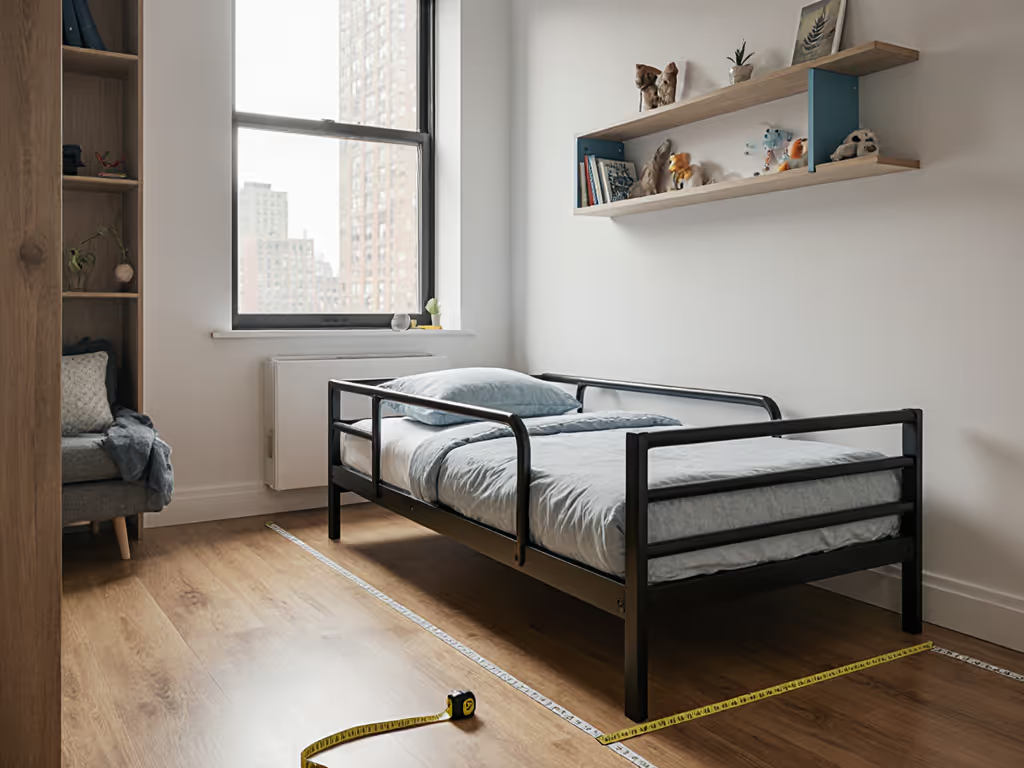
Tape out a 207 × 96.5 cm rectangle on your floor in your proposed bed location. Walk the nighttime path: from the child's bed to your bed, to the bathroom, to the door. Can you move unobstructed? Does the door swing open fully, or does the bed block it at a 45-degree angle? If the bed blocks the path, either the position is wrong (rotate, move to another wall) or the bed is wrong (the bunk or loft is simply too wide for the room).
If you cannot clear the nighttime path (the single most important safety and sleep metric in a small room) neither frame is the answer. Return and reconsider a true single-size platform bed or a wall-mounted fold-down frame.
Step 3: Define Your Storage Needs
List where clothes, toys, bedding, and shoes currently live. In a loft scenario, can a rolling dresser (about 60 cm wide × 40 cm deep) fit underneath? Do you want a toy shelf or a reading nook instead? The bunk forces storage elsewhere; the loft invites you to integrate it. If you lack a spare dresser and cannot afford one, the loft's storage potential is theoretical, not real, and you'll resent it.
For the bunk, you must place a dresser elsewhere. This is only feasible if you have an adjacent wall or hallway space. If the bedroom is a true 11 sq meter rectangle with no alcove, the bunk leaves no room for a separate dresser, and you're forced to use wall-mounted shelving or a narrow cabinet (not standard toddler furniture).
Step 4: Assess Age and Climbing Confidence
Both frames require your child to climb a central ladder. The bunk's lower height (84 cm between surfaces) is gentler for an 18-30 month old who is still developing motor control. A fall from the top bunk (100 cm high) is more serious than a fall from 50 cm. The loft's platform is at 145 cm; a fall from there is significant.
If your child is under 2.5 years, the bunk is safer. If your child is 3.5+ and already sleeps independently, the loft is viable.
Step 5: Check Mattress and Sheet Compatibility
Both Tuffing frames accommodate 90 × 200 cm mattresses (twin size in the EU; full in some markets). If you're navigating imports, see our US vs EU toddler bed standards guide. Verify that your intended mattress (crib-to-toddler conversion or a new purchase) meets this size and that the maximum thickness is 11 cm for the bunk, 15 cm for the loft.
Sheets are critical: ensure you can source fitted sheets for 90 × 200 cm. Many US retailers stock 90 × 190 cm, which is close but not identical and may slip. European retailers (Amazon.de, Babymarkt) stock the correct size readily.
Assembly Experience: What to Expect
Bunk Bed Assembly (90-110 minutes)
The bunk comes in three packages: the main frame rails, the metal slat support system, and the ladder assembly. You'll need a Phillips screwdriver and the provided Allen key. Lay out all pieces on your bedroom floor before starting; the frame is long and tight in stairwells.
The sequence is: connect side rails, insert slat support bars, attach the ladder, then install guardrails. Each step is illustrated in IKEA's PDF instructions, which are clear but dense. If you've assembled IKEA STUVA or KURA models, the Tuffing follows a similar logic.
One gotcha: the ladder center-mount requires precise alignment. If bolts are not tightened fully, the ladder will wiggle. Tighten every bolt in two passes: once finger-tight to position, then fully with the Allen key.
Loft Bed Assembly (110-140 minutes)
The loft is heavier and taller. Three packages again, but with more frame rails and additional support bars to accommodate the height. Follow the same sequence as the bunk, but plan for a second person to stabilize the frame while you work. A wobbling tall frame is stressful and dangerous during assembly.
Do not skip tightening bolts; a tall frame under a sleeping child must be rock-solid. Test by pressing down hard on the sleeping surface; if it flexes or shifts, re-check every connection.
Real-World Durability and Longevity
Both frames are steel, which is durable and rust-resistant in normal indoor conditions (not bathrooms or humid basements). After 3-5 years of toddler use (climbing, jumping on the bed, pulling on rails) expect no structural failure, but monitor:
- Guardrail wrapping: The polyester covering can tear. Small tears are cosmetic; larger ones are safety hazards. IKEA replacement rail kits are inexpensive but sometimes unavailable.
- Mattress support slats: Over time, metal slats can sag slightly if a toddler jumps repeatedly. This is normal wear and does not affect safety, only comfort. Replacement slat sets are available.
- Paint and finishes: The dark grey finish is a powder-coated steel. It resists scratches well, but deep gouges will expose bare metal (no rust in indoor conditions, but visually unappealing).
For resale or hand-me-downs, both frames remain valuable. A used Tuffing bunk in good condition typically sells for 40-60% of the original price on Facebook Marketplace or local parenting groups, especially if you include the original instructions and spare bolts.
Final Verdict: Choosing Your Frame
The Tuffing toddler bed review ends where it began: in your tape measure and your floorplan, not in marketing copy. The bunk is the pragmatic choice for families in genuine micro-apartments (under 13 sq meters) with children under 3.5 years, where two sleep zones are non-negotiable and storage is handled elsewhere. The loft is the strategic choice for families with slightly more room (13-18 sq meters), older toddlers, and a plan to fill the underbelly with functional storage or a second activity zone.
The Tuffing assembly experience is more demanding than a standard platform bed, but achievable in under two hours with two adults, clear instructions, and no distractions. Wobble and noise are non-issues if bolts are fully tightened.
Both frames embody the principle that every inch should work twice. Your job is to measure first, visualize your bedtime paths, then choose what fits, not what Instagram says looks good. If your room does not have a clear nighttime path after the bed is in place, no frame is the right frame. If it does, the Tuffing line gives you a low-cost, durable, space-efficient solution that will serve your child from the crib transition through early elementary school.
Start with tape. End with a better night's sleep.
Related Articles

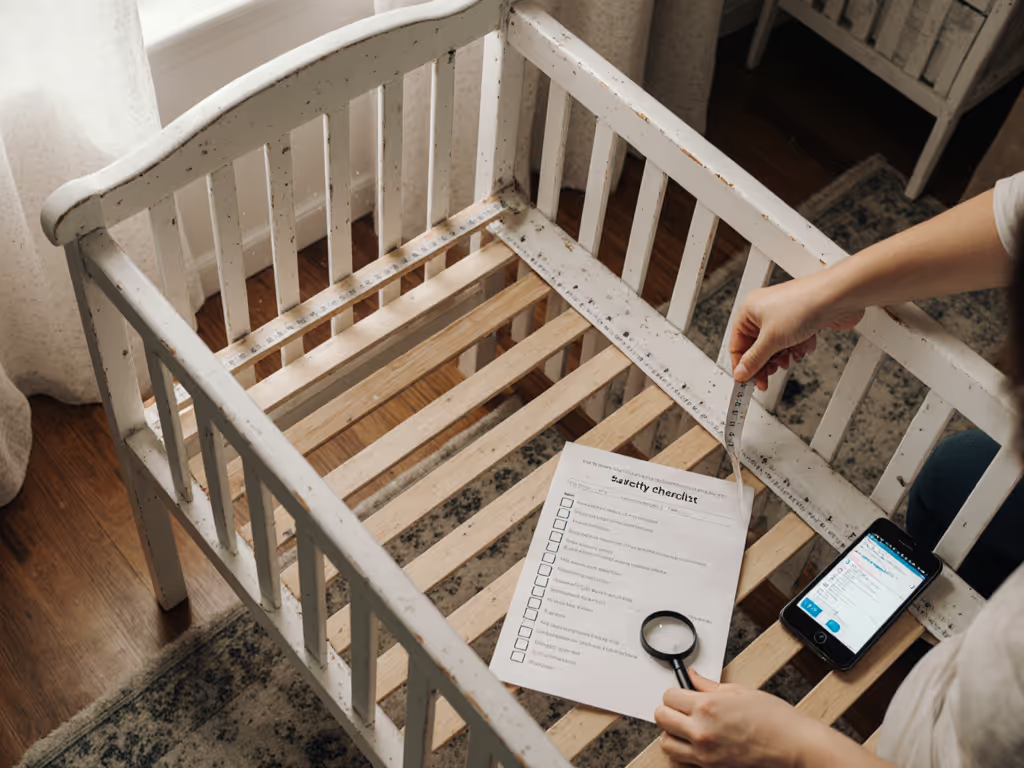
Verified Amazon Toddler Beds for Real Room Fit
Choose a toddler bed that truly fits tight rooms without compromising safety by verifying real footprint, clearance zones, guardrail design, and VOC transparency. Follow the checklist and consider the Delta Children Canton as a reliable pick while avoiding oversized twin frames that waste space and increase fall risk.