Bed Rails vs Bed Bumpers: Safety Data Comparison
By Jamal Adeyemi • 12th Apr

When transitioning a toddler from crib to bed, the choice between bed rails and bed bumpers hinges on measurable safety data, attachment reliability, and your family's specific sleep environment, not marketing claims. Both serve a genuine purpose for children ages 2-5, but they operate on entirely different risk hierarchies[1], and understanding those differences is essential before installation. For critical guardrail dimensions and setup basics, see our 5-inch guardrail safety guide.
The Problem: Nighttime Falls and Real Safety Gaps
Moving from a crib to a toddler bed introduces a legitimate hazard. Bed falls are frightening and, in worst cases, result in serious injury[1]. Parents naturally reach for guardrails or bumpers as a protective layer. Yet the market conflates these products as interchangeable, but they are not.
The stakes clarify when you examine federal safety data. The U.S. Consumer Product Safety Commission (CPSC) has documented deaths and entrapment incidents specifically tied to gaps between bed rails and mattresses[2]. When a child becomes caught in such a gap, even briefly, outcomes can be catastrophic. This is not theoretical risk; it is a documented failure mode that shaped mandatory federal standards in 2012[2].
Worse, many parents assume that any rail attachment prevents falls equally well. In reality, attachment method, hardware permanence, and edge geometry each contribute to either safety or hazard[2]. A loose bolt, a wobbly frame, or a sharp corner can undermine the entire protective intent, and these defects often emerge only after weeks of use.
Agitation: What the Data Actually Reveals
Rail Design and Entrapment Risk
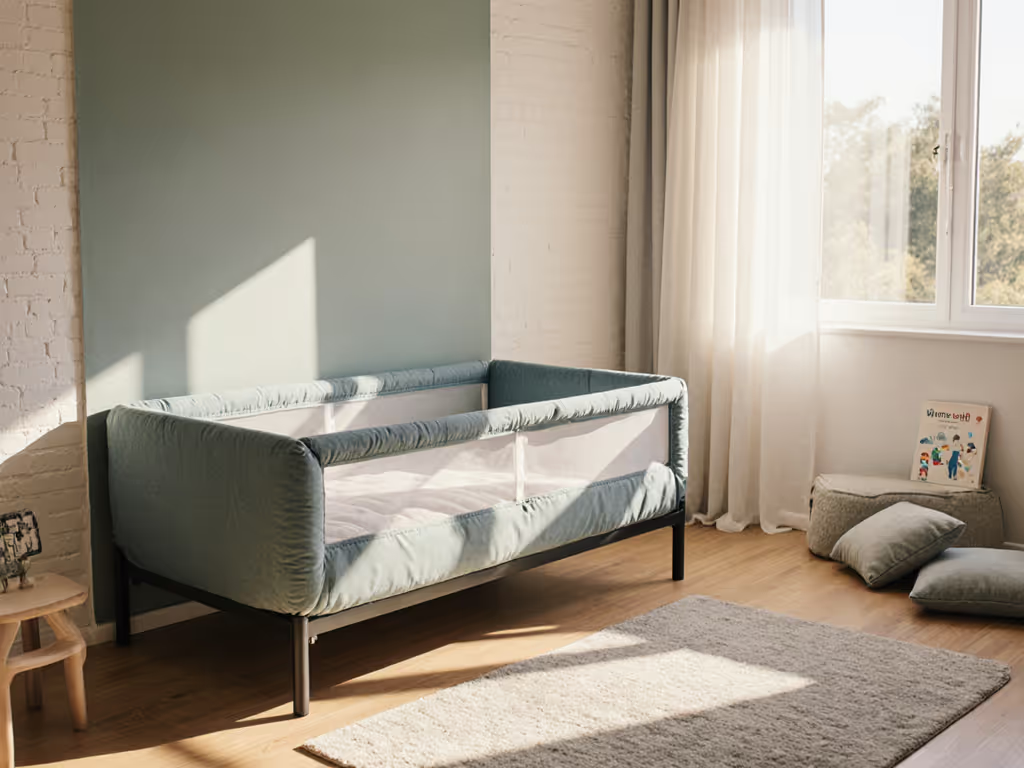
Bed rails are rigid or semi-rigid mesh-covered barriers attached to the side of the bed[4]. They create a physical blockade intended to prevent rollout. However, their effectiveness depends entirely on how securely they are anchored and whether gaps exist between the rail, mattress, and bed frame[2].
The federal standard now mandates that:
- Portable bed rails must not create dangerous gaps where a child can fall[2]
- Hardware must be permanently attached and cannot be assembled unsafely[2]
- Installation anchors and straps must be permanently affixed with warning labels[2]
- Rails must be free of sharp edges, points, and small parts[2]
Yet compliance alone does not guarantee stable, gap-free performance in a real bedroom. A rail installed on an uneven floor, or one with a mattress that compresses unevenly, can shift over weeks[4]. This is why experts now recommend frequent maintenance checks to confirm the rail remains flush against the mattress and bed frame[4]. Use our toddler bed maintenance checklist to schedule and document these inspections.
I watched this play out at a playdate: a well-intentioned high rail became a lever when a toddler used it to vault sideways. The rail itself was compliant. The installation was correct. But the design (tall, rigid, with a handle-like top) invited the very behavior it was meant to prevent. No injury that day, but it reframed how I evaluate guardrail geometry: a rail's effectiveness depends not just on code compliance, but on whether its shape and height match how toddlers actually move.
Bumper Design and Active Sleeper Performance
Bed bumpers are softer, lower alternatives. They sit under the fitted sheet, creating a gentle cushioned rise along the mattress edge[4]. They come in two primary materials: foam (firm but cushioned) and inflatable (compressible but highly portable)[3][4]. If you’ll be moving between homes or traveling frequently, consider these bed rail alternatives for travel and shared rooms that pair well with inflatable bumpers.
Bumpers address a different risk profile than rails. They do not prevent rollout entirely; instead, they absorb impact and slow momentum[4]. For active sleepers (children who thrash, roll, and reposition repeatedly), foam bumpers tend to provide better containment than inflatable ones[4]. Inflatable bumpers, by contrast, excel in portability and pack down significantly, making them suitable for travel or temporary setups[4].
Critically, bumpers create minimal gap risk because they sit under bedding rather than extending upward[3]. There is no entrapment point, no sharp edges to catch, and no rigid hardware to fail. For this reason, bumpers are considered unsuitable only for bunk beds or loft beds (where a child could fall over rather than roll off)[3].
Space Efficiency and Room Layout
For the primary audience, urban parents in compact apartments and condos, footprint matters. Bed rails add visual bulk. Their rigid mesh panels extend upward 15-20 inches, making the bed look larger and drawing the eye[4]. In a 200-square-foot bedroom shared by two children, that visual dominance fuels clutter perception and overstimulation at bedtime.
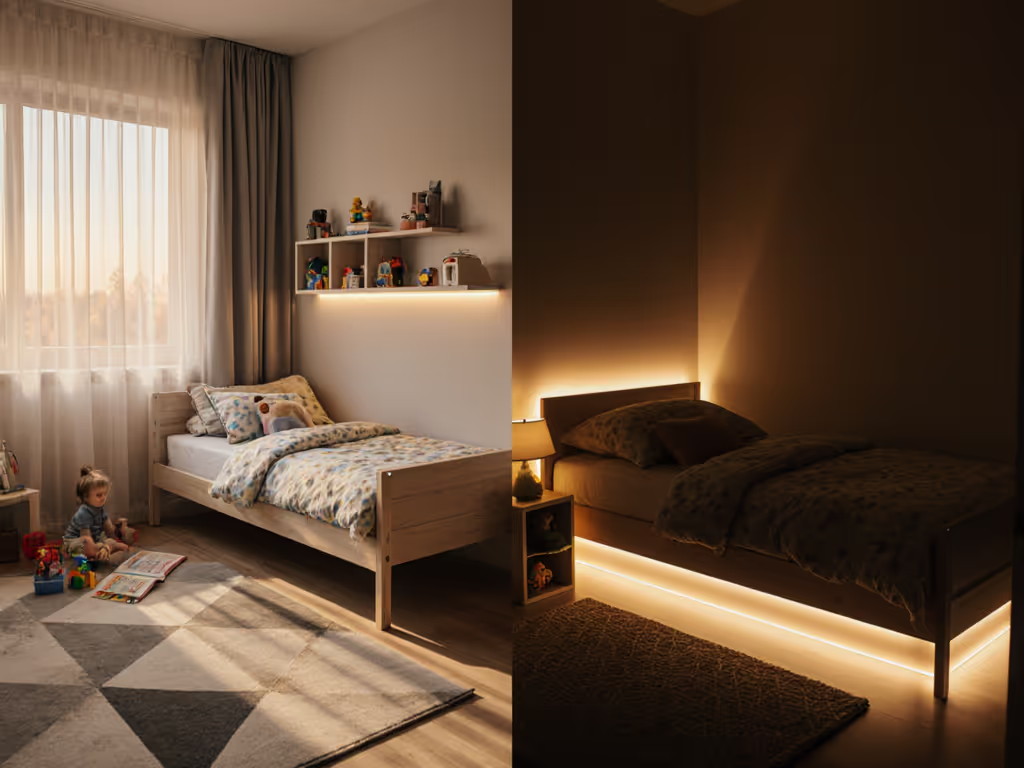
Bumpers, by contrast, occupy no visual real estate. They compress flat under the sheet and add less than 2 inches of height[3]. In tight layouts, this difference is not an aesthetic preference; it is functional. A low-profile bumper allows wall-hugging placement, corner setups, and clear pathways for doors, drawers, and trundle access.
Solving the Choice: Data-Driven Decision Framework
When Rail Design Wins: Stability and Center of Gravity
Bed rails excel when you need maximum visible containment and when your child is less of a thrashing sleeper. A rigid rail provides clear psychological reassurance: the barrier is obvious, unyielding, and difficult to inadvertently escape[4].
Rails are also better suited to:
- Taller toddlers (3.5-5 years) who require more robust containment
- Children transitioning from standard adult beds (not low-profile toddler frames)
- Bedrooms where you have square footage to spare and prefer the "locked" feeling of a rigid guard
Critical maintenance steps if you choose rails:
- Verify permanent attachment of all hardware before first use[2]. Test bolts and straps by hand; they should not shift or rattle[4]. For step-by-step hardware setup and gap checks, follow our bed rail installation guide.
- Check fit weekly for gaps between rail, mattress, and bed frame. A gap wider than 1 inch is unacceptable[2][4].
- Ensure the mattress sits evenly in the frame; uneven compression creates gaps over time[4].
- Inspect for sharp edges, especially at corners and attachment points[2].
- Purchase new, not secondhand, to ensure full safety history and recall status[4].
When Bumper Design Wins: Low-and-Slow Geometry
Bumpers are the low-and-slow design choice: boring, predictable, and effective for the majority of toddlers in small spaces. They eliminate entrapment risk by design, reduce visual clutter, and maintain maximum usable floor area.
Bumpers excel when:
- Your bedroom is under 150 square feet or shared by multiple children
- Your toddler is an active, aggressive sleeper and needs soft impact absorption
- You prefer minimal assembly, rapid setup, and zero wall-anchoring requirements
- You rent and cannot install hard attachments
- You want the lowest center of gravity and easiest floor-to-mattress transition
- You plan to travel frequently and need portability
Key maintenance for bumpers:
- Inspect the foam or inflation before each sleep cycle. Flat or compressed bumpers provide no protection[4].
- Ensure the bumper sits under the fitted sheet and does not shift during the night[3].
- For foam bumpers, check that the cover is securely stitched; detached fabric can become a strangulation risk[3].
- For inflatable bumpers, use the included hand pump and check for slow leaks; they must remain fully inflated nightly[4].
- Wash covers regularly, especially after nighttime accidents[4].
The Safety Hierarchy: Where Evidence Points
Federal safety data emphasizes one principle above all: secure permanent attachment prevents catastrophic gaps, and gaps are the leading cause of entrapment injury[2]. Rails achieve this through bolts and anchors, but only if installed exactly per instructions and checked frequently[4].
Bumpers eliminate gaps entirely by design, shifting risk from entrapment to simple rollout impact, a lower-severity outcome[4].
No independent study cited in current literature ranks bumpers or rails as universally superior; instead, medical experts note they "are different in design, but not necessarily clearly different in safety"[4]. The distinction is type of risk, not presence or absence of risk.
Material Safety and VOC Disclosure
Regardless of which option you choose, verify material safety data. Not sure which labels matter? Here’s our guide to toddler bed safety certifications explained. Foam bumpers should carry phthalate-free and BPA-free certification[3]. Metal rail frames should be powder-coated (not painted) and free of lead[2]. Request VOC disclosure documentation from manufacturers; off-gassing in a small, sealed bedroom accumulates quickly[3].
Making Your Family's Decision
Your choice depends on three variables:
- Room size and layout. Small spaces demand bumpers. Larger rooms with dedicated toddler bed zones can accommodate rails.
- Sleep movement profile. Active thrashers benefit from bumper absorption. Calmer sleepers may do fine with rails.
- Installation permanence. Renters and frequent movers prefer bumpers. Long-term residents can invest in rail systems with confidence.
Boring and low beats pretty and risky every time. A low-profile foam bumper that eliminates entrapment risk and saves floor space is not glamorous, but it is safer, more practical, and kinder to your small-space sanity.
Further Exploration
Before purchasing any guardrail system:
- Consult the CPSC's bed rail database for active recalls[2]
- Request VOC and material certifications from the manufacturer in writing
- Read at least five real-world user reviews, focusing on maintenance issues and long-term stability
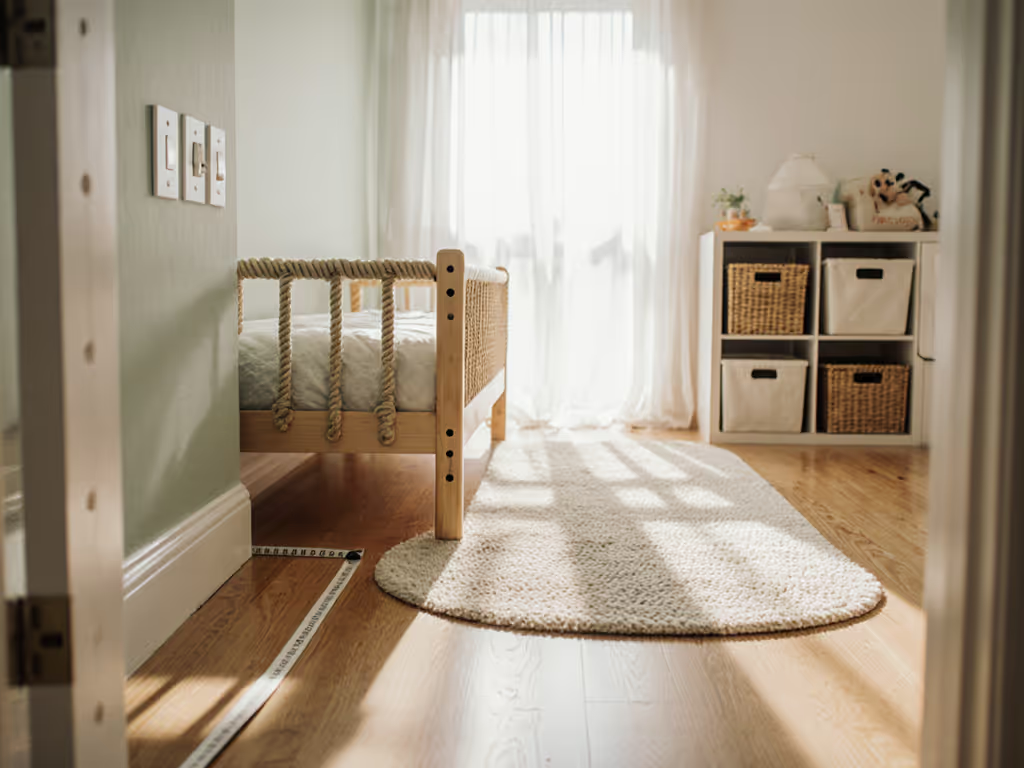
- Measure your mattress, frame, and room layout precisely; compare against product dimensions and clearance diagrams
- If choosing rails, plan weekly maintenance checks into your routine (set a calendar reminder)
- Consider renting a small second bed bumper to test before committing to rails; portability is an underrated advantage
Your sleep-deprived brain does not need more decisions. Evidence, measurements, and honesty about your space will guide you toward the option that truly protects your child and preserves your sanity.
Related Articles