Toddler Beds for Sensory Processing: Materials & Fit
By Anika Gupta • 7th Mar
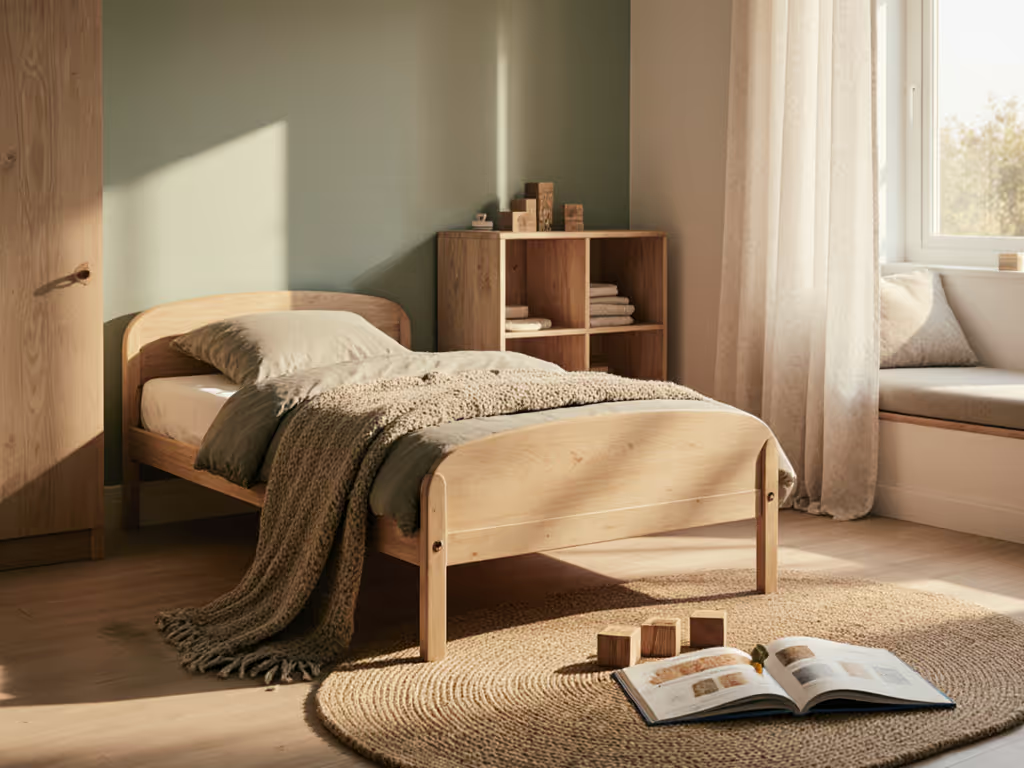
Selecting the right sensory toddler bed requires balancing three critical factors: how a bed's materials affect your child's nervous system, whether its physical dimensions work in your actual room, and whether its construction will endure repetitive use without creating new sensory triggers like squeaks or wobbles. This article decodes what "sensory-friendly" really means in materials terms and helps you match bed design to both your child's tactile needs and your floor plan.
What Makes Materials Sensory-Friendly for Toddlers?
Why Off-Gassing Matters More Than Marketing Claims
When you unbox a new bed frame, that chemical smell isn't incidental; it's off-gassing. Volatile organic compounds (VOCs) in paints, stains, adhesives, and fabrics release into the air, and children with sensory processing differences often react more intensely to these odors than their peers. The intensity doesn't always correlate with harm, but the sensory distraction (and the parental headaches) is real.
I learned this firsthand when our first toddler bed arrived smelling like a paint aisle. We aired it in the hallway for a week and tracked VOCs with a low-cost meter; the odor dropped, and so did my headaches. Since then, I chase clean materials first, because invisible comfort matters as much as cushy mattresses. If you can smell it, plan to air it.
An off-gassing timeline of 48 to 72 hours is typical for water-based finishes; traditional varnishes and solvent-based stains can emit for weeks or months. Request product specification sheets to confirm finish chemistry before purchase. For a breakdown of safe paints and finishes, see our non-toxic finishes guide.
Solid Wood vs. Engineered Wood Clarity
Solid wood (pine, hardwoods) has lower inherent off-gassing because it contains fewer adhesives. It also allows for simpler finish repairs, a crucial advantage when considering that repair beats replace. A scratched solid wood rail can be sanded and re-sealed in an afternoon; engineered wood (plywood, MDF, particle board) cannot.
Engineered wood is cheaper and acceptably durable but relies on formaldehyde-based adhesives to bind veneers and layers. Budget-friendly beds often use this construction with lower-cost finishes that off-gas more persistently. Check certifications: GreenGuard Gold or FloorScore indicate stricter VOC caps than general safety standards.
Finish Chemistry and Tactile Safety
Water-based stains and polyurethane are your safest off-gassing bet. They emit primarily water vapor and alcohols, which dissipate quickly. Solvent-based finishes contain benzene and toluene; avoid them for toddler beds, especially in small rooms with limited air circulation.
For a child with tactile considerations for SPD (sensory processing disorder), the finished surface itself matters. For a deep dive into how texture, temperature, and noise vary by frame material, see our sensory-safe materials test. Rough or splintery wood creates genuine discomfort, not just sensory aversion. Sand the bed's edges and rails smooth; non-scratchy, hypoallergenic seams on guardrails reduce meltdowns during the transition from crib to bed.
Design Features That Support Sensory Processing
Enclosed and Semi-Enclosed Structures
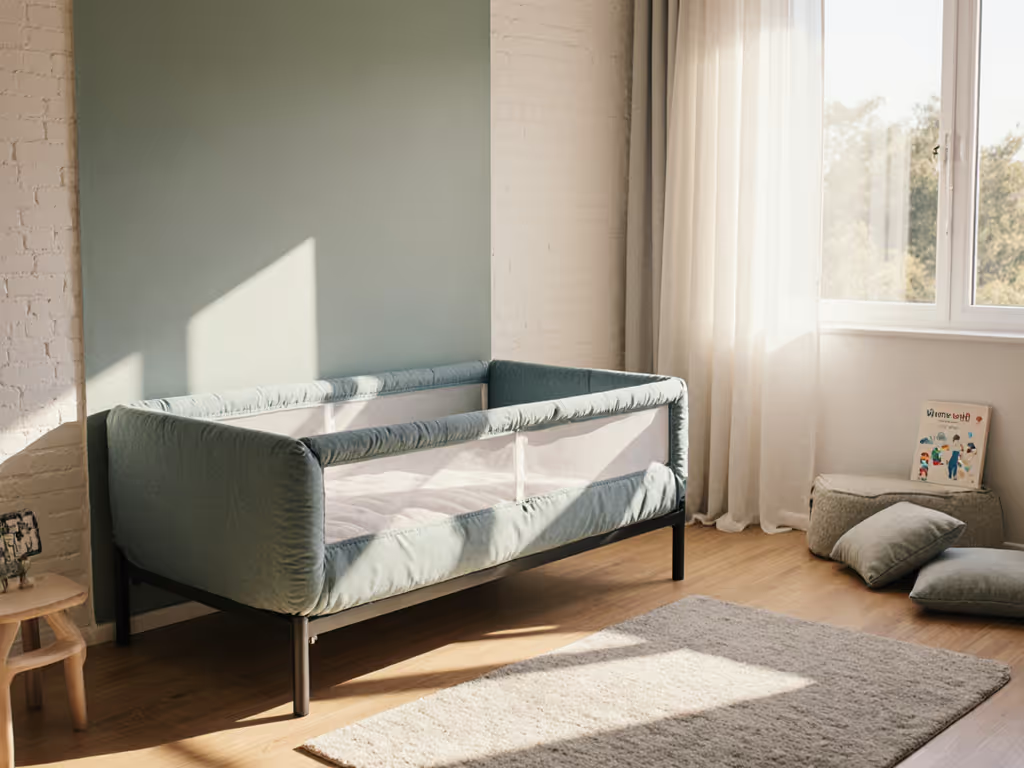
Sensory-friendly bed designs often include canopies, tent-like coverings, or high-sided rails that create a sense of containment. This isn't decoration; it serves a neurological function. An enclosed structure reduces visual stimulation from light, movement, and the broader room environment, signaling to a child's nervous system that it's safe to power down.
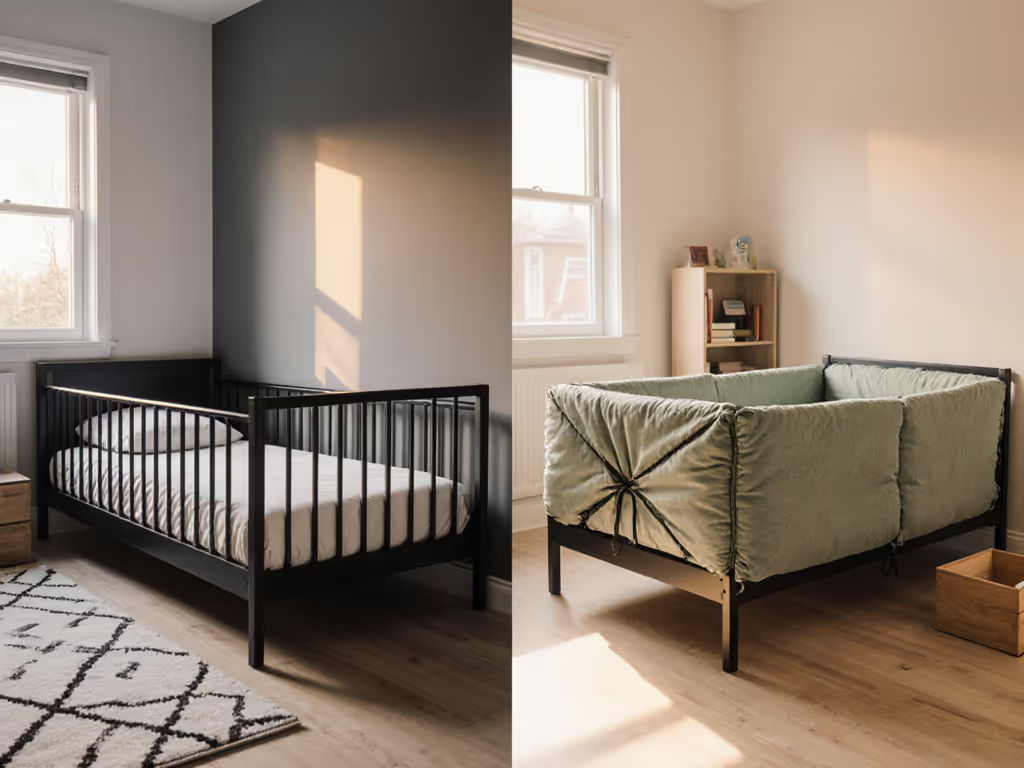
For toddlers, partial enclosure works well: a canopy frame over the bed or a tent-style cover that can be removed during the day. Full pod beds or safety enclosures are excellent if your child wanders or tends toward dangerous behaviors at night, but they consume more floor space.
Noise and Vibration Suppression
A creaky bed frame or slatted base that transmits motion is a hidden sensory stressor. Children with sensory sensitivities often wake from sound vibrations rather than movement. Look for:
- Solid, not slatted, bases that reduce transmission of motion between components
- Felt pads under all legs (not plastic, which creates sliding friction and noise)
- Guardrails attached with soft-close mechanisms, not metal-on-metal joins that rattle
- Corner reinforcements that stabilize the frame and eliminate wobble
This is where construction quality shows. Learn how different builds affect noise in our quiet toddler beds guide. A cheap frame flexes and creaks; a well-built toddler bed sits rigid and silent.
Color and Visual Predictability
Calming toddler bed colors typically fall within muted, neutral ranges: soft grays, whites, natural wood tones, and pale blues or greens. Avoid high-contrast patterns or bright finishes that increase visual stimulation. Children with sensory processing challenges often find solid, predictable visual environments calming; it reduces cognitive load at bedtime.
Mattress and Bedding: The Second Layer of Comfort
Choosing a Mattress for Sensory Needs
The mattress type matters as much as the frame. Compare support options in our toddler mattress firmness guide tailored for developing bodies. Memory foam provides even pressure and reduces motion transfer (good if siblings share the room); firm support feels more grounding for children who seek deep pressure input. Some children prefer to be tucked tightly; others need freedom to move. Test both if possible.
Mattresses made from organic materials are hypoallergenic and typically carry lower off-gassing profiles than conventional polyurethane foam. Pair a quality mattress with breathable, soft bedding. Cooling or breathable fabrics reduce overheating and irritation, both sensory triggers at night.
Textural Aversions and Seams
If your child is hypersensitive to touch, inspect guardrail seams, mattress stitching, and fitted sheet edges closely. A smooth, predictable texture across the entire bed surface prevents daily friction-related frustration. Avoid ribbon ties, decorative tags, or anything that protrudes unexpectedly.
Fitting Sensory Beds Into Small Spaces
Low-Profile Safety for Tiny Rooms
In apartments or condos under 900-1,200 sq ft, a toddler bed for sensory processing must double as a space optimizer. Low-profile frames sit just 6-8 inches from the floor, meeting two needs at once: they're genuinely safer for the crib-to-bed transition, and they free visual space in the room. A bed with integrated under-bed drawers replaces a separate dresser, consolidating furniture and leaving clear pathways for doors and closets. Explore safe low-height designs with drawers in our toddler storage beds picks.
Dimensions, Clearances, and Floor Plans
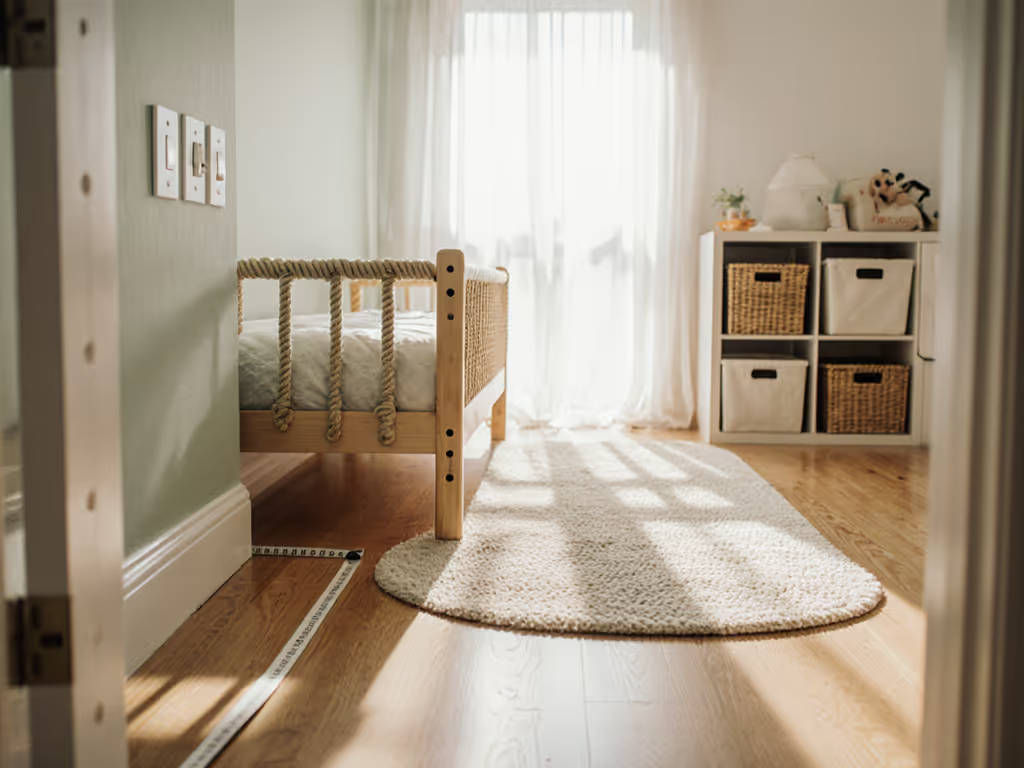
Before purchasing, measure your floor plan in detail: the distance from the bed's foot rail to the door, window, or vent. Account for guardrail height (typically 4-6 inches), which affects sight lines and the perceived size of the room. A bed that looks compact in a showroom photo may block ventilation or create a pinch point in a real 10-by-12-foot room.
Request exact external dimensions, not just mattress size. Standard toddler beds are roughly 28×52 inches (mattress only) but can be 32×58 inches (frame with rails), which can be a significant difference in micro-apartments.
Maintenance: A Long-Term Durability Plan
Caring for Finishes to Extend Lifespan
A sensible maintenance plan keeps a bed looking fresh and off-gassing-free for years. Wipe down water-based finishes monthly with a barely damp cloth; dry immediately. Avoid harsh cleaners that strip the protective coat, exposing raw wood and triggering re-off-gassing. For gouges or scrapes in solid wood, light sanding and touch-up stain are simple repairs, another reason repair beats replace.
Engineered wood frames tolerate less intervention; deep damage is permanent. Plan for this limitation when budgeting for longevity.
Textiles and Washability
Choose guardrail covers and bedding that are machine-washable and quick-drying. Nighttime accidents are inevitable; materials that can be cleaned without off-gassing solvents keep the sensory environment stable. Avoid dry-clean-only fabrics or those requiring special treatments.
Key Questions to Ask Before Purchasing
Does the manufacturer disclose off-gassing timeline and finish type? Vague marketing ("non-toxic" or "eco-friendly") means nothing. Demand spec sheets listing stain and polyurethane chemistry.
What certifications does the frame carry? GREENGUARD Gold, GreenGuard Certified, or CPSC (Consumer Product Safety Commission) compliance indicate third-party testing. FSC (Forest Stewardship Council) wood sourcing is a bonus.
Can I air the bed before assembly, or does it arrive pre-assembled? Flat-pack beds allow pre-airing; ready-assembled frames may require active off-gassing indoors. Factor this into your timeline.
Does the bed accommodate a standard toddler or twin mattress? Proprietary sizes lock you into the manufacturer's replacement options and limit resale or hand-me-down potential.
How thick are the guardrails, and are seams smooth? Run your hands over all edges. If you catch anything, so will a sensitive toddler.
Is the base solid or slatted, and what attaches to what? Slatted bases transmit vibration; solid bases dampen motion. Metal screws and bolts should be recessed or capped to prevent sharp contact.
Moving Forward
Selecting a sensory-friendly bed isn't about buying the most expensive option or the one with the most features. It's about understanding how materials communicate with your child's nervous system and how dimensions communicate with your actual floor plan. Start by defining your non-negotiables: Is off-gassing your primary concern? Is sound sensitivity the biggest trigger? Is space the limiting factor? Once you know your priorities, you can filter through options systematically rather than guessing.
When you find a candidate, ask to see the spec sheet, touch sample finishes if possible, and verify dimensions against a floor plan. The bed that truly fits (both sensorily and spatially) is the one that transforms bedtime from a battle into a calming ritual your whole family benefits from.
Related Articles