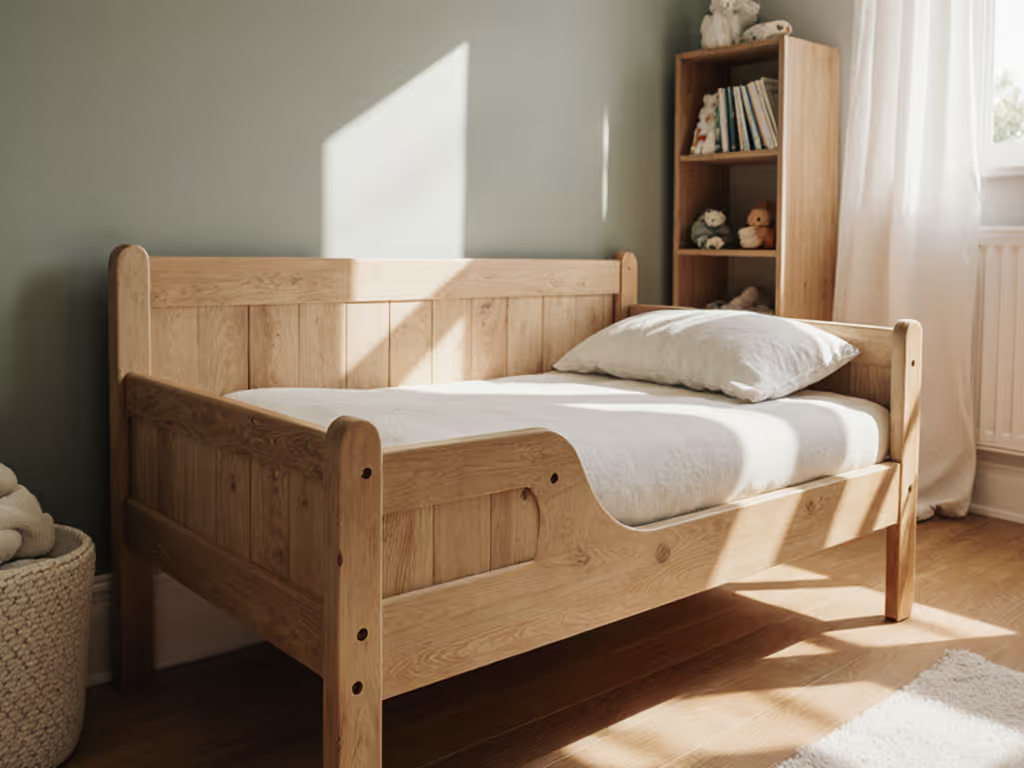
Toddler Bed Carbon Footprint: Lifecycle Analysis Compared
By Jamal Adeyemi • 1st Jan
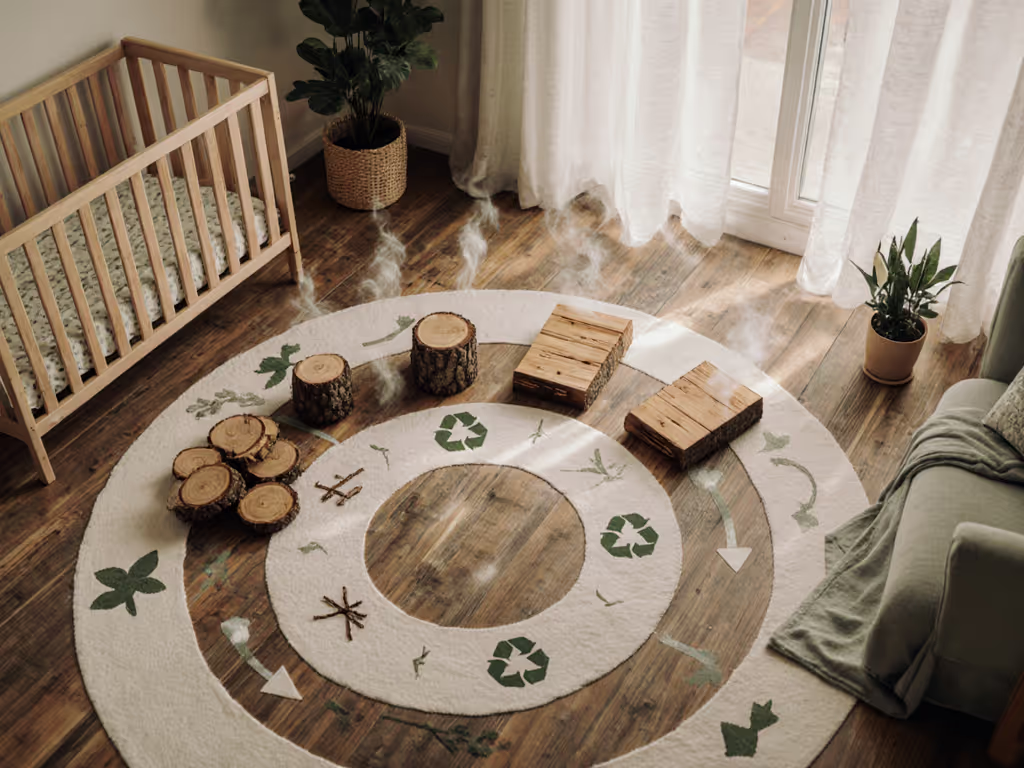
As parents carefully evaluate toddler bed lifecycle analysis considerations, they're increasingly recognizing that the environmental impact toddler beds generate extends far beyond their functional years. This comprehensive FAQ examines how material choices, manufacturing processes, and end-of-life scenarios contribute to the carbon footprint of children's furniture, with special attention to how safety requirements intersect with sustainability. For product picks that prioritize verified eco materials and certifications, see our eco-friendly toddler beds comparison. Understanding these dynamics helps conscientious caregivers balance their dual priorities: creating a safe sleep environment that minimizes environmental harm without compromising on structural integrity.
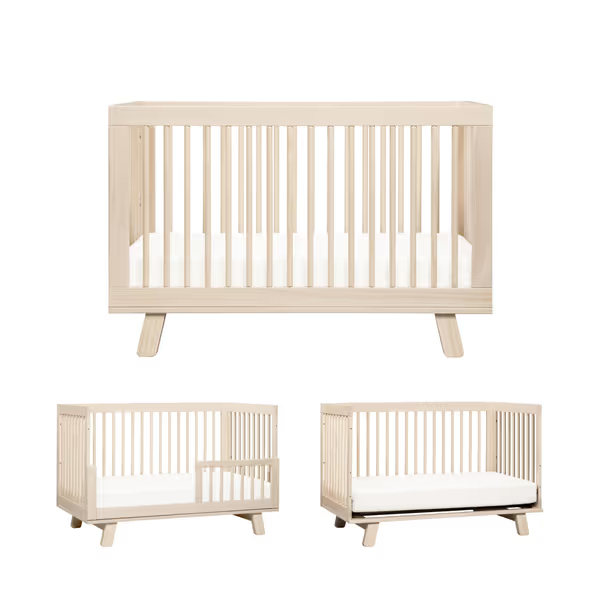
Babyletto Hudson 3-in-1 Crib
GREENGUARD Gold certified 3-in-1 crib grows with your baby.
$499
CertificationsGREENGUARD Gold
CertificationsGREENGUARD Gold
Pros
Converts crib to toddler bed to daybed, extending use.
4 adjustable mattress heights for safety and parent comfort.
Non-toxic, sustainably sourced wood with hidden hardware.
Cons
Wood quality receives mixed customer feedback.
Some reports of scratches/damage on rails.
Customers find the crib has a modern style and is easy to assemble, with solid construction and good value for money.
Customers find the crib has a modern style and is easy to assemble, with solid construction and good value for money.
What is Lifecycle Analysis for Toddler Beds?
Lifecycle analysis (LCA) is a systematic method for evaluating environmental impacts associated with all stages of a product's life, from raw material extraction through materials processing, manufacture, distribution, use, repair and maintenance, and disposal or recycling. For toddler beds, this means examining:
- Raw material sourcing: The carbon cost of harvesting or producing wood, metal, textiles, and finishes
- Manufacturing energy: Power consumption and emissions during production
- Transportation: Emissions from shipping components and finished products
- Usage phase: Energy consumption (minimal for beds, but relevant for any electrical components)
- End-of-life: Impacts of disposal, landfill, incineration, or recycling
The most comprehensive LCAs, like those referenced in the Norwegian study of continental beds, reveal total carbon footprints of approximately 610 kg of CO2e, including production, mattress replacement, and final disposal. For smaller children's furniture like toddler beds, these figures scale down proportionally, but the methodology remains consistent. This structured approach allows for meaningful eco-certification comparison between products, moving beyond marketing claims to quantifiable environmental metrics.
How Does a Typical Toddler Bed's Carbon Footprint Compare?
A mid-range toddler bed typically generates between 100-250 kg CO2e across its lifecycle, comparable to the emissions from driving a standard car 600-1,500 miles. To contextualize this:
- A single 3,000-mile cross-country flight for one person generates approximately 1,000 kg CO2e
- Annual household electricity use for an average US home is about 8,000 kg CO2e
- Manufacturing a smartphone produces about 85 kg CO2e
The infant care phase study published in the NIH archives reveals that the first three years of life carry a carbon burden of 4,011 kg CO2e, with furniture contributing a meaningful portion. When considering carbon footprint children's furniture specifically, the choice of bed materials significantly influences the total:
| Material | Approx. kg CO2e per bed | Notes |
|---|---|---|
| Pine wood | 80-120 | Especially sustainable when FSC-certified and locally sourced |
| MDF/composites | 140-180 | Higher due to adhesives and processing energy |
| Steel frame | 160-220 | Very durable but energy-intensive production |
| Recycled plastics | 60-100 | Lower emissions but concerns about long-term durability |
"When evaluating furniture carbon metrics, remember that longevity directly reduces per year environmental impact. A bed that lasts 5-7 years through multiple children carries a fraction of the annual footprint of one replaced annually."
What Materials Create the Biggest Environmental Impact?
Wood selection proves most consequential in toddler bed lifecycle analysis. The American Hardwood Export Council's LCA study of the Meraki Daybed revealed a carbon footprint of 173 kg CO2e, equivalent to 7 days of average South African emissions. Key findings relevant to toddler beds include:
- Sustainably sourced hardwoods (like FSC-certified maple) can actually store carbon (111 kg CO2e in the Meraki example)
- Cork padding offers low carbon impact (18 kg CO2e offset through biomass combustion)
- Particle board and MDF typically carry 30-50% higher carbon footprints than solid wood due to adhesive production
- Metal components contribute significantly to manufacturing emissions but enhance longevity
The material efficiency matters greatly, a high-end custom piece like the Meraki Daybed achieves nearly 50% material efficiency, meaning half the wood input becomes the final product. Mass-produced toddler beds often achieve lower efficiency (35-45%), increasing waste and associated emissions. When evaluating options, request VOC disclosure documentation alongside carbon claims, as low-emission finishes often correlate with reduced manufacturing impact. For chemical safety specifics and guidance on finishes, see our non-toxic paint and finishes guide.
How Does Safety Design Intersect with Environmental Impact?
Here's where my background researching low-profile toddler beds reveals critical tensions. A well-designed safety rail that keeps children secure should also consider its environmental cost. At a playdate years ago, I watched a toddler's creative attempt to vault a high rail transform it into an unintended lever, a detailed failure mode that reshaped my approach to safety evaluation.
This observation connects directly to circular economy toddler beds principles:
- Lower center of gravity designs reduce tipping risk while requiring less material than high-rail alternatives
- Appropriate edge radius (minimum 1/4 inch) enhances safety without adding significant carbon cost
- Stable anchoring hardware increases durability, extending product life and reducing replacement frequency
- Modular safety components allow replacement of individual parts rather than the entire bed
Each safety feature requires material and manufacturing energy, creating a risk hierarchy where we must weigh prevention benefits against environmental costs. The evidence consistently supports simpler, lower-profile designs that nip hazards upstream through thoughtful geometry rather than added components. Boring and low beats pretty and risky every time, a principle that serves environmental goals as well as safety ones.
What Should I Look for in Eco-Certifications?
Not all green claims hold equal weight. When evaluating eco-certification comparison for toddler beds, focus on these verified standards:
-
GREENGUARD Gold Certification: While primarily focused on indoor air quality and chemical emissions, this standard correlates with manufacturing processes that often have lower carbon footprints.
-
Forest Stewardship Council (FSC) Certification: Ensures wood comes from responsibly managed forests. Look for the "FSC 100%" label rather than "Mixed" or "Controlled Wood" for maximum environmental benefit.
-
Cradle to Cradle Certified: The most comprehensive standard, evaluating material health, material reuse, renewable energy use, water stewardship, and social fairness. Products achieving Silver or higher demonstrate genuine circular economy principles.
-
Environmental Product Declarations (EPDs): These manufacturer-verified documents provide transparent lifecycle data. Demand these when available, they represent the most direct evidence of environmental impact toddler beds actually generate.
Beware of vague terms like "eco-friendly," "green," or "natural" without third-party verification. True sustainability requires transparency about the entire lifecycle, not just isolated attributes.
How Can Disposal Practices Affect Overall Carbon Footprint?
The end-of-life phase significantly influences sustainable toddler bed disposal outcomes. Conventional disposal methods create different environmental burdens:
- Landfill: Releases methane (a potent greenhouse gas) as wood decomposes anaerobically
- Incineration: Converts stored carbon back to CO2 immediately rather than over decades
- Recycling: Requires energy but displaces virgin material production
- Resale/donation: Maximizes utility phase, dramatically reducing per-year footprint
Research from the Norwegian scientists working with Wonderland shows that redesigning for disassembly can reduce total carbon footprint by up to 50%. Their approach included:
- Standardized fasteners that simplify component separation
- Material labeling to facilitate proper recycling streams
- Modular design allowing replacement of worn components
- Take-back programs that incentivize return of used products
When your toddler outgrows their bed, seek resale platforms, donation centers that accept children's furniture, or manufacturer take-back programs. Before buying or selling used, follow our second-hand toddler bed safety checklist to verify structural integrity and recalls. Proper sustainable toddler bed disposal completes the circular journey and maximizes your initial environmental investment.
Final Considerations for Conscientious Caregivers
Selecting a toddler bed requires balancing safety, practicality, and environmental responsibility. Remember that the most sustainable bed is one that remains in use for years (through multiple children if possible) with structural integrity that prevents premature replacement. To keep beds safe and durable over time, use our toddler bed maintenance guide. Look for designs that prioritize durability over disposability, transparency over greenwashing, and simplicity over complication.
The convergence of safety engineering and environmental science reveals that many optimal solutions serve both goals: low-profile designs with appropriate edge radius enhance safety while reducing material use; stable construction with proper center of gravity extends product life; and anchoring hardware that stays secure avoids replacement cycles.
For parents seeking further validation of claims, I recommend:
- Requesting Environmental Product Declarations from manufacturers
- Checking third-party verification of eco-certifications
- Researching company take-back and recycling programs
- Considering second-hand options from reputable sources
Safety should feel boring, and that's beautiful. When we design children's furniture with environmental consciousness as inherently as we do with physical safety, we create products that protect not just individual children, but their future world as well. To deepen your understanding of sustainable furniture evaluation, explore the growing body of peer-reviewed LCA research in journals like the International Journal of Life Cycle Assessment and resources from the Sustainable Furnishings Council.
Related Articles