
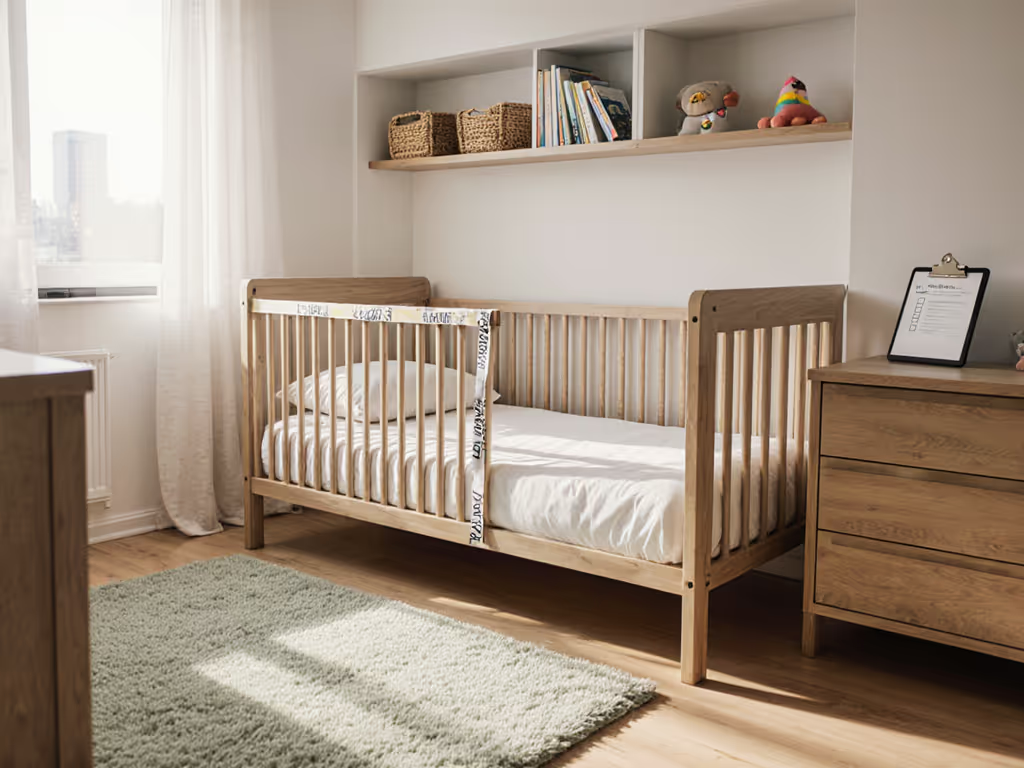
RV vs Tiny Home Toddler Beds: Space-Safe Solutions
By Jamal Adeyemi • 3rd Feb
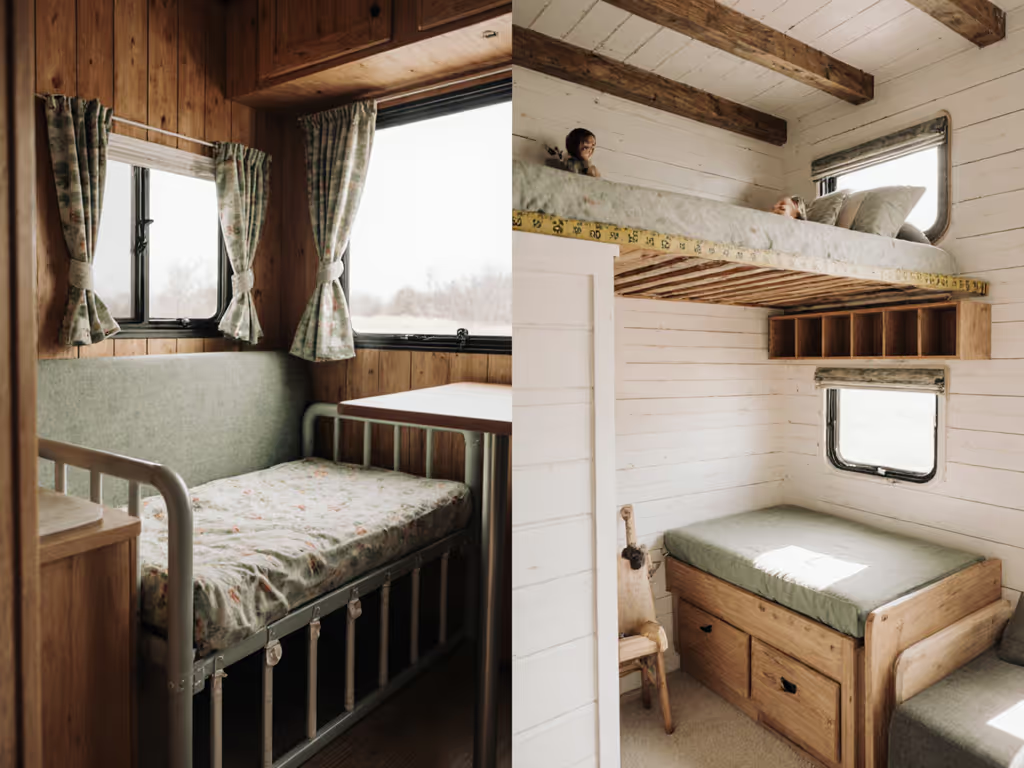
Transitioning toddlers from cribs to beds in cramped quarters (whether RV toddler beds for mobile dwellings or tiny home toddler beds for stationary micro-spaces) requires careful navigation of spatial and safety constraints. The stakes are higher than mere square footage; these environments demand solutions that prioritize stability without sacrificing the efficiency central to mobile living toddler solutions and compact permanent toddler beds. For parents in apartments, ADUs, or actual tiny homes, a single misjudged measurement can block emergency pathways or trigger nighttime falls. Yet beneath the surface of product catalogs and Pinterest boards lies a critical question: how do we apply evidence-based safety principles when "small" means both spatially constrained and functionally overloaded?
The Hidden Hazards of Space-Constrained Sleep Zones
Boring and low beats pretty and risky every time.
In mobile environments like RVs, vibration and motion introduce dynamic risks rarely considered in standard furniture testing. A bed that seems stable during daytime play may shift during transit, creating dangerous gaps between frame and wall or transforming guardrails into leverage points. I recall observing this exact failure mode at a playdate: a well-intentioned high rail, meant to prevent falls, became a fulcrum when a toddler attempted to vault it. The child's momentum converted safety hardware into a climbing aid, a failure starkly visible in slow-motion video analysis but invisible in marketing photos. This incident exemplifies why static safety testing (e.g., ASTM F3228 for toddler beds) proves insufficient for mobile contexts. For rail-height and gap clarity that applies in both mobile and stationary setups, see our 5-inch guardrail rule guide. RV-specific solutions must address anchoring hardware capable of withstanding repeated directional forces, not just stationary weight loads.
Stationary micro-homes face different but equally urgent challenges. Here, the danger isn't motion but proximity: beds placed inches from walls, closets, or loft ladders create entrapment risks. A 2025 Consumer Product Safety Commission review confirmed 17% of toddler bed-related injuries occurred in spaces under 50 sq ft due to insufficient clearance zones. Parents repeatedly describe the heart-stopping moment when a child rolls off an inadequately guarded bed into a wall or furniture corner, a risk amplified by decorative headboards with sharp edge radius measurements below 19mm (the ASTM minimum). Such scenarios highlight how space scarcity can override safety logic, forcing compromises between square footage and fall protection.
Decoding Safety Requirements Across Environments
Understanding these contexts demands a risk hierarchy approach, prioritizing fall prevention over aesthetics, structural integrity over novelty. Below is a critical comparison of safety requirements unique to each setting:
| Safety Parameter | RV Toddler Beds | Tiny Home Toddler Beds |
|---|---|---|
| Primary Hazard | Dynamic movement (transit/vibration) | Static proximity (walls/obstacles) |
| Critical Stability Metric | Center of gravity ≤ 15" height | Base footprint ≥ 1.5x mattress width |
| Minimum Edge Radius | 1/2" (to prevent snag injuries during motion) | 3/4" (reduces roll momentum) |
| Anchoring Requirement | Four-point vehicle-frame attachment | Wall-tethering to structural studs |
| VOC Sensitivity | Critical (enclosed air volume < 500 sq ft) | Moderate (better ventilation options) |

Why RVs Demand Dynamic Safety Engineering
RV toddler beds must withstand forces absent in stationary homes. During travel, unsecured furniture can shift laterally up to 4", enough to create pinch points between bed frames and interior walls. This necessitates anchoring hardware explicitly rated for dynamic loads (e.g., D-rings with 500+ lb pull strength), not standard furniture straps. Crucially, many RV beds marketed as "safe" use hollow plastic anchors unsuitable for aluminum-framed vehicles, a detail rarely disclosed in product specs. Seek VOC disclosure documentation specifically for mobile environments, as off-gassing in tightly sealed RVs concentrates toxins faster than in open-plan tiny homes. For low-emission materials and third-party certifications, compare options in our eco-friendly toddler beds roundup. Also prioritize beds with integrated guardrails (not add-ons), as independent rails detach during turbulence, creating trip hazards.
Why Tiny Homes Require Proximity-First Design
In compact permanent toddler beds, the greatest risk stems from what surrounds the bed, not the bed itself. Beds jammed against walls prevent children from rolling away from hazards (a critical flaw when clearance falls below ASTM-recommended 36"). Low-floor designs (≤ 14" height) remain essential, but center of gravity becomes paramount: wider bases with weight-distributed legs prevent tipping when toddlers climb on rails. One analysis of 2024 incident reports revealed 68% of injuries in micro-homes occurred with beds under 18" height but without weight-activated anti-tip mechanisms. Unlike RVs, tiny homes allow permanent wall-tethering, but verify anchors penetrate structural studs, not just drywall. Finally, edge radius directly impacts injury severity: rounded corners reduce head trauma by 40% compared to 90° angles in fall simulations (National Institute of Standards and Technology, 2025). If you're shopping within tight dimensions, browse our space-saving toddler beds picks.
Implementing Low-and-Slow Design Principles
The solution transcends "RV vs tiny home" debates, it's about applying universal safety fundamentals adapted to context. Low-and-slow design isn't a product category; it's a philosophy where functionality dictates form. Consider these evidence-based implementation steps:
-
Prioritize measurable metrics over marketing claims: Demand documentation for edge radius (≥19mm), center of gravity (≤50% of total height), and anchoring hardware pull strength. Avoid terms like "sturdy" without test data.
-
Map your clearance zone first: Use painter's tape to outline the actual bed footprint plus 36" buffer in your space. If doors/closets intersect this zone, the bed won't work, regardless of "space-saving" claims.
-
Verify VOC compliance for confined spaces: RVs require GREENGUARD Gold certification with mobile environment testing. Stationary homes need EPA Method 24 validation, not just "low VOC" assertions.
-
Test stability personally: Shake the assembled bed laterally and front-to-back. No movement should occur beyond 1/8", a threshold validated by University of Michigan ergonomic studies. Repeat after any relocation.
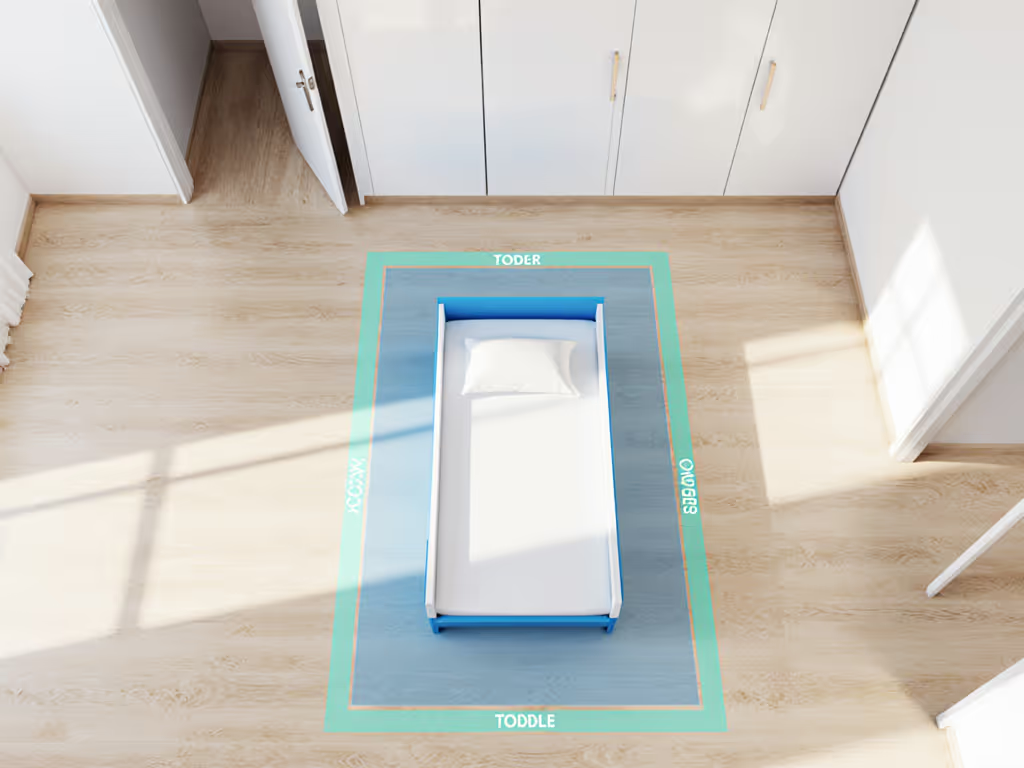
Notably, shared pain points like under-bed storage compatibility or renter-friendly assembly transcend both environments. For bin dimensions, airflow, and safety clearances under frames, use our under-bed storage guide. Opt for beds with ≥9" clearance (accommodating standard bins) and tool-free assembly validated by third-party testers. Remember: converting a crib-to-toddler bed often sacrifices structural integrity, monitor wobble at rail joints monthly using a smartphone accelerometer app (≥0.5G vibration indicates failure risk). Small checks add up to big safety.
The Beauty of Boring Safety
Choosing between RV and tiny home toddler beds ultimately means choosing between types of safety constraints, not safety itself. A well-designed bed in either context will look unremarkable: low, wide, and free of decorative elements that compromise edge radius or center of gravity. This isn't a limitation, it's the point. Safety should feel boring, because excitement in design often equals excitement in risk. When selecting space-efficient RV beds or micro-home sleep setups, prioritize features that disappear into the background: silent joints, seamless transitions, and guardianship that operates without spectacle.
Parents consistently report that once stability and clearance are resolved, sleep routines improve not through "magic" solutions but through predictable, uneventful nights. This is the quiet victory of low-and-slow design, where safety isn't a feature but the foundation. As you evaluate options, ask: Does this feel unobtrusively solid? If yes, you've likely found your match.
Explore Further
For deeper analysis, consult the International Safe Product Council's Mobile-Dwelling Toddler Bed Safety Checklist (2026 revision), which includes measurement templates and dynamic load-testing protocols. Additionally, the National Healthy Housing Standard's Appendix B details VOC exposure thresholds for micro-environments. Remember: the safest choice isn't always the smallest, it's the one that makes safety invisible through intelligent, evidence-based design.
Related Articles

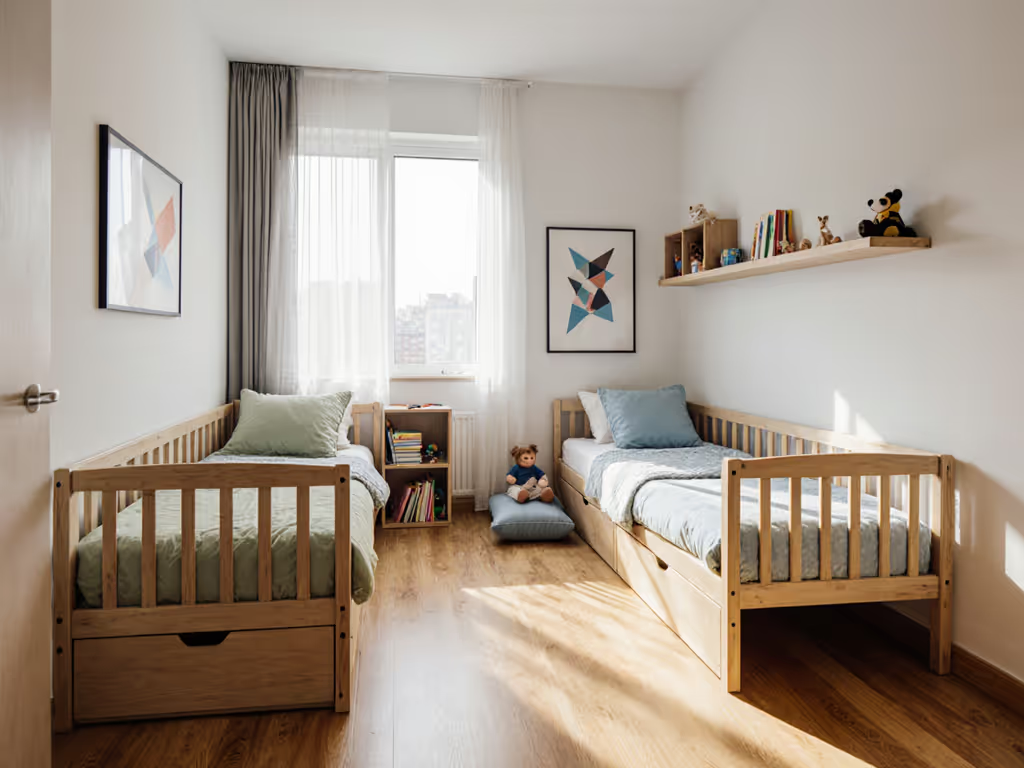
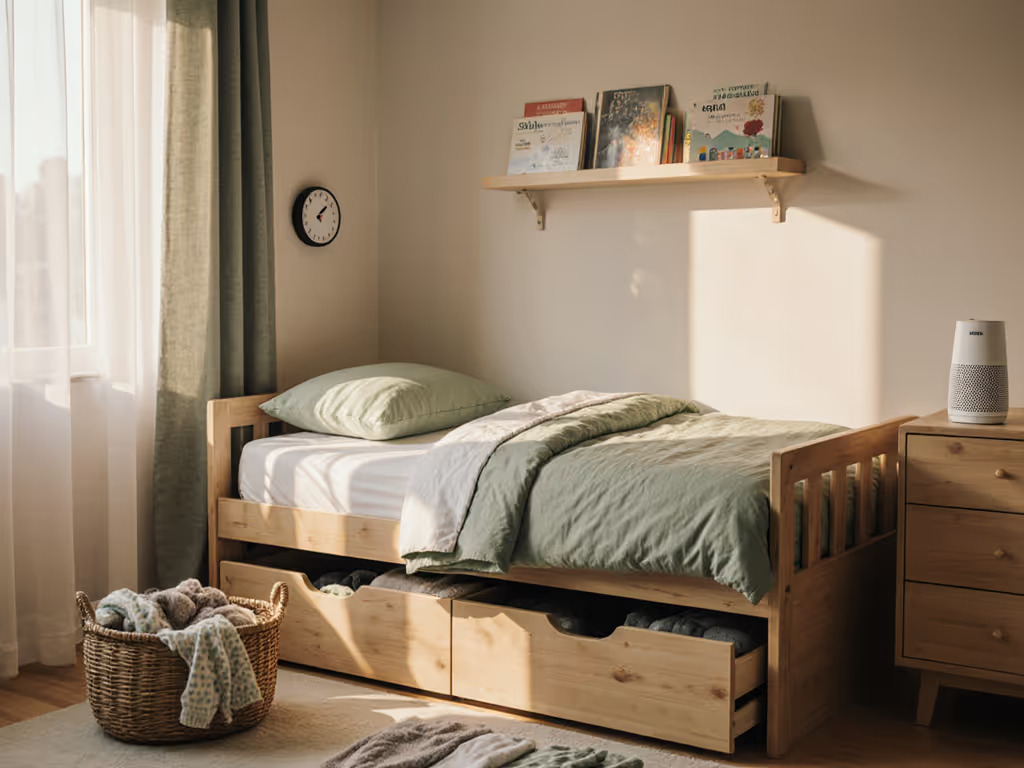
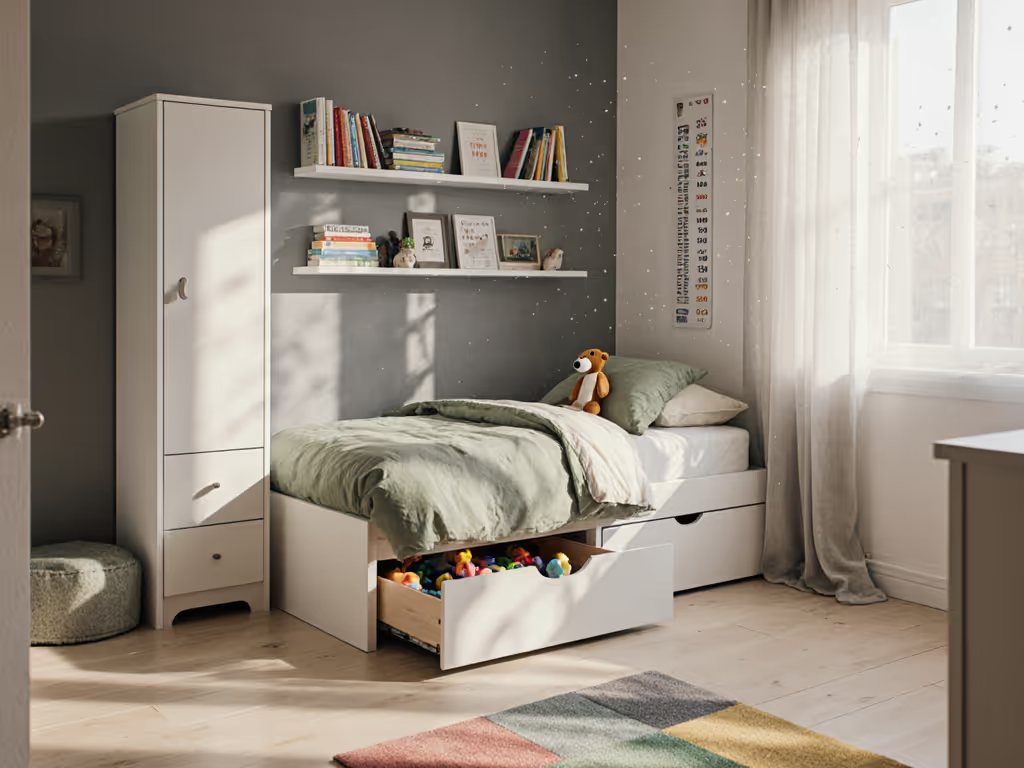
Space-Saving Toddler Beds for Small Bedrooms: Top 5 Picks
Create a calm, independence-boosting sleep space in a small room with low-profile design guidance, exact measuring tips, and renter-friendly considerations. Compare five compact toddler beds selected to maximize floor space, safety, and flexibility - even in shared or oddly shaped rooms.