Safe Toddler Beds for Cerebral Palsy: Positioning Solutions
By Jamal Adeyemi • 13th Jan
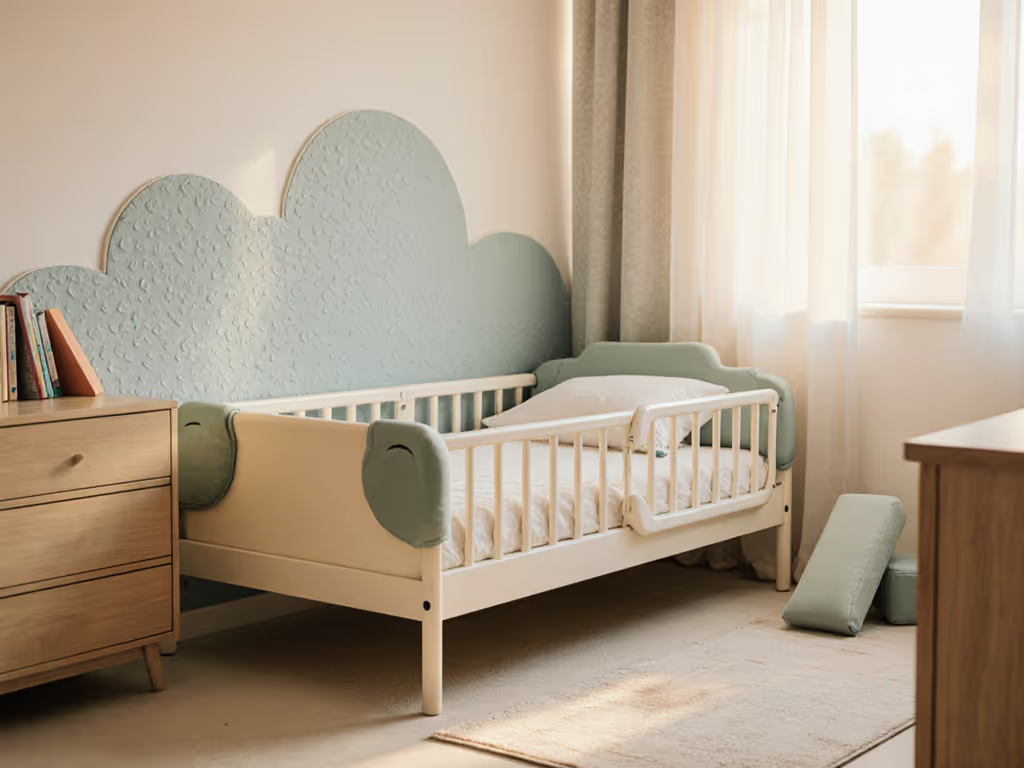
When researching toddler beds for cerebral palsy, parents often discover a critical gap: standard safety beds rarely address the unique positioning needs of children with motor challenges. While medical-grade sleep systems (like those in cerebral palsy hip migration studies) handle complex postural requirements, most families still need age-appropriate toddler beds that prioritize stability without compromising developmental safety. As a parent and product safety researcher focused on low-profile designs, I've observed how conventional solutions fail children with CP (including that playdate where a "safe" high rail became a vaulting hazard). Boring and low beats pretty and risky every time. Today's guide cuts through the noise with evidence-based positioning principles for CP-friendly toddler beds, grounded in the reality of small living spaces and everyday caregiver constraints. If you’re balancing mobility needs in a tight room, see our adaptive toddler beds for space-smart options.
Why Standard Toddler Beds Fall Short for CP
General toddler beds prioritize drop-side safety and independence but ignore critical risk factors for children with cerebral palsy:
- Inadequate positioning support: Most lack adjustable abduction angles or lateral bolsters needed to prevent hip migration (a documented concern in CP studies)
- Unstable platforms: Lightweight frames shift during movement, increasing fall risk during nocturnal muscle spasms
- Poor edge radius: Sharp corners exacerbate injury risk during involuntary movements
- Height limitations: Beds exceeding 12" height create dangerous fall distances for children with balance challenges
As confirmed by cerebral palsy mobility research, even mild motor impairments require intentional design choices. Standard products often overlook the risk hierarchy where stability must precede aesthetics.
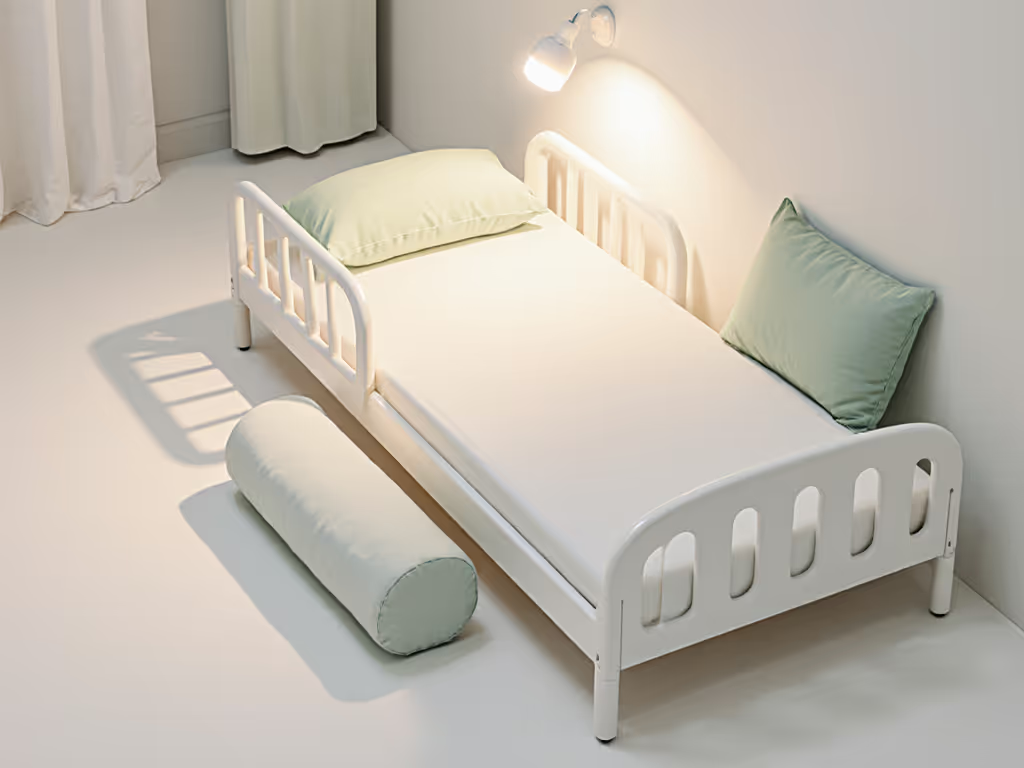
Top 5 Safety Priorities for CP-Friendly Toddler Beds
1. Center of Gravity and Stability > Portability
"Low-and-slow design isn't just philosophy, it's physics."
Furniture marketed as "lightweight" for apartment living often has dangerously high centers of gravity. For children with CP, look for:
- Weight ≥45 lbs (even if harder to move)
- Base width exceeding mattress dimensions by 3+ inches
- Non-slip rubber feet covering 80%+ of footprint
- Center of gravity below the mattress midpoint (test by gently rocking)
This stability prevents bed shift during leg movements (a common cause of falls per caregiver surveys). Avoid "convertible" beds with spindly legs; they sacrifice stability for versatility.
2. Rounded Edges and Soft Contours
Children with CP experience involuntary movements that increase collision risks. Prioritize:
- Edge radius ≥1.5 inches on all corners (measured with a radius gauge)
- Continuous curved profiles (no abrupt transitions between frame elements)
- Removable fabric guards for high-impact zones (tested to withstand 50+ lbs force)
Avoid hard plastic rails or wooden edges thinner than 2 inches (these create dangerous fulcrums during attempted vaulting), as I witnessed with that playdate incident.
3. Integrated Positioning Support
While medical positioning systems require therapist oversight, basic toddler beds can incorporate CP-friendly features:
- Removable lateral bolsters (minimum 6" height) with quick-release straps
- Adjustable hip abduction angles (15°-30° range) via modular inserts
- Non-slip mattress pads rated for 200+ lbs shear force
Note: Never substitute DIY wedges or pillows (they shift position and create suffocation risks). Seek products with VOC disclosure for any foam components to avoid chemical exposure during prolonged contact.
4. Safe Height Parameters
The optimal height varies by CP severity, but critical thresholds exist:
| CP Severity Level | Max Bed Height | Essential Features |
|---|---|---|
| Mild (GMFCS I-II) | 10 inches | Low center of gravity, rounded edges |
| Moderate (GMFCS III) | 8 inches | Integrated bolsters, non-slip base |
| Severe (GMFCS IV-V) | 6 inches | Lateral supports, anchor points |
GMFCS = Gross Motor Function Classification System. Always consult your child's PT.
Beds exceeding 12" height require wall anchoring hardware, yet most "low-profile" beds skip this feature to maintain "easy mobility," creating dangerous instability.
5. Renter-Friendly Safety Modifications
For apartment dwellers, permanent modifications aren't an option. Safe alternatives include:
- Pressure-mounted bed anchors (tested to 300+ lbs)
- Non-marking rubber grippers between bedframe and floor
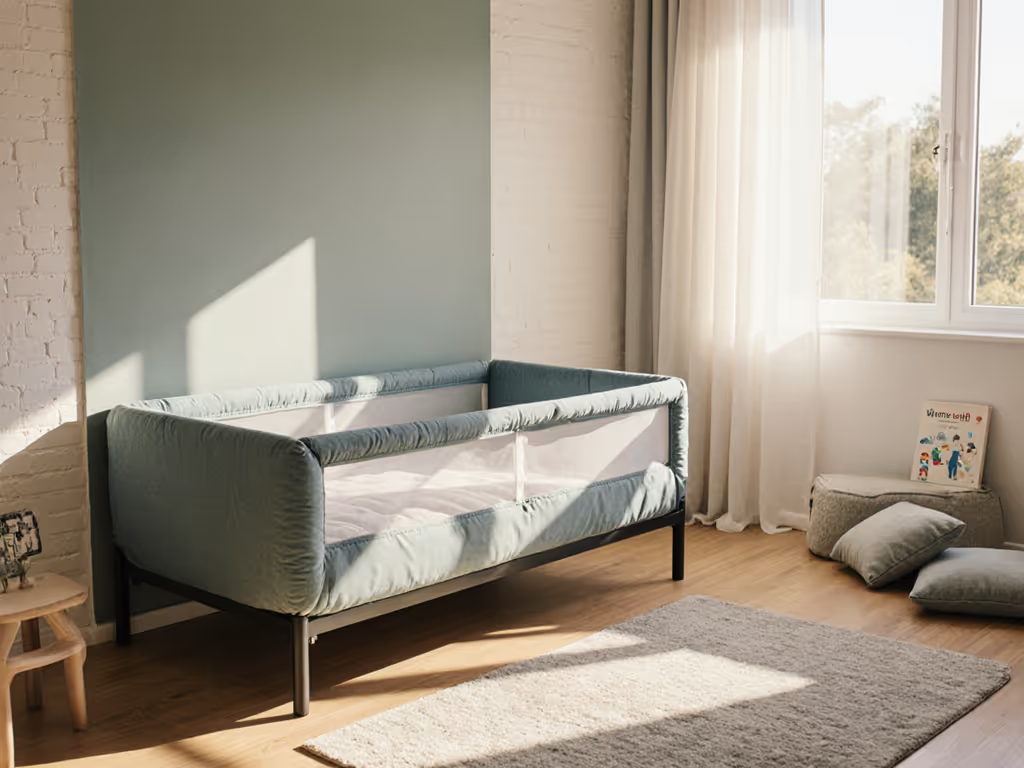
- Freestanding guardrails with independent bases (not attached to bed)
"Anchor the bed, not the wall (preserves security without compromising your lease)."
Avoid tape-based solutions; they lose adhesion within weeks. For a whole-room safety check including anchoring and cord management, see our childproofing toddler bedroom guide. Verify that any add-on meets ASTM F3232-23 safety standards for toddler bed restraints.
Critical Questions to Ask Before Buying
Can this bed replace medical positioning equipment?
No. Commercial sleep positioning systems (like Sleepform® or Chailey Lying Supports™) serve specific clinical purposes unrelated to standard toddler beds. Pediatric beds for CP require 24-hour postural management supervised by therapists. Toddler beds merely provide supplemental stability during independent sleep transitions. As the PMC study confirms, improperly configured positioning may worsen hip migration. Never use a toddler bed as primary therapy equipment.
What makes a bed "CP-friendly" versus "adaptive"?
True adaptive beds for motor challenges feature:
- Customizable abduction angles
- Weight-activated bed alarms
- Integrated pressure-relief surfaces
Whereas CP-friendly toddler beds focus on foundational safety: low height, stability, and rounded edges. Confusing these categories risks inadequate support. For children with GMFCS III+ classifications, consult mobility specialists before purchasing standard toddler furniture.
How do I verify "non-toxic" claims?
Demand specific VOC disclosure:
- Third-party certifications (GREENGUARD Gold, CPSIA)
- Full chemical ingredient lists (not just "eco-friendly")
- Test reports for off-gassing duration (must be ≤72 hours)
Many "low-VOC" finishes peak at 14 days (dangerous for children with respiratory sensitivities common in CP). To decode labels like GREENGUARD Gold and CPSIA, read our toddler bed safety certifications guide.
When to Skip Toddler Beds Altogether
For children with significant mobility limitations (GMFCS IV-V), traditional toddler beds create false security. You may be better served by our floor bed parent guide for safe, padded low-to-ground setups. Consider:
- Floor sleep systems with padded perimeters
- Medical-grade low-height beds with tilt functionality
- Custom wheelchair-accessible platforms
Safety should feel boring - and that's beautiful. The most effective solutions often lack "innovative" features because they solve fundamental problems: keeping children securely contained without encouraging risky behaviors. That playdate incident taught me that high rails invite climbing through the risk hierarchy: first stability, then simplicity, then strength. For toddlers with CP, eliminate all leverage points; choose what stays stubbornly put.
Further Exploration
While this guide focuses on safe toddler bed principles, your child's specific needs require professional assessment.
Remember: low-and-slow design prioritizes quiet reliability over flashy features. The safest bed is the one that disappears into your routine, because when safety feels uneventful, everyone sleeps better.
Related Articles