European Toddler Beds: Premium Craftsmanship vs. Real Value
By Jamal Adeyemi • 19th Mar
When you're shopping for a premium European toddler bed, you're not just buying sleep furniture; you're investigating a claim that European-made translates to "safer" and "worth the premium." The question every space-conscious parent should ask first isn't "How much does it cost?" but "What am I actually getting for the investment?" This guide cuts through the marketing to examine whether luxury toddler bed craftsmanship justifies the price, or if smart selection means something else entirely.
The Real Difference: Craftsmanship vs. Marketing
What Does "European-Made" Actually Mean for a Toddler Bed?
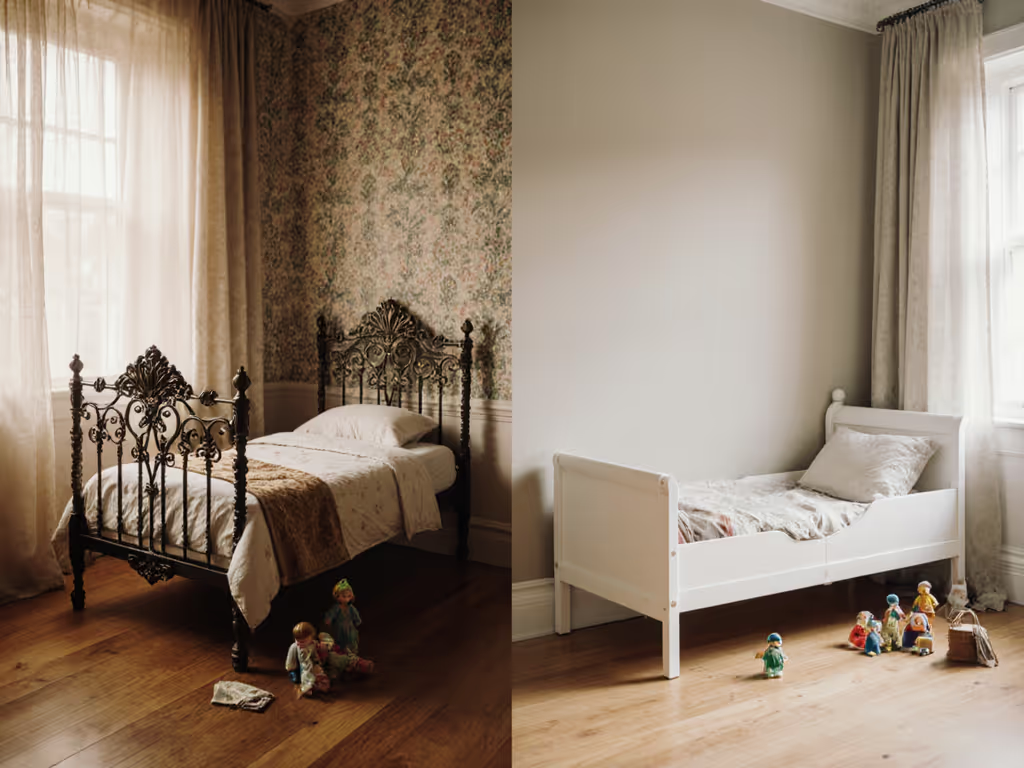
European brands (particularly Scandinavian, Belgian, and Dutch makers) dominate the premium toddler bed market. But "European" is an umbrella covering wildly different manufacturing standards and price points. Some European factories produce extraordinarily detailed work; others chase volume with methods similar to mass manufacturers worldwide.
The difference worth scrutinizing is in three concrete areas:
- Joinery and edge radius: Quality European makers invest in hand-fitted joints, rounded corners (typically 2-5 mm edge radius), and wood-to-wood connections rather than cam locks and dowels alone. This isn't cosmetic; a properly radiused edge resists chipping and reduces the risk of cuts during sleep transitions.
- Center of gravity and anchoring hardware: Low-and-slow design philosophy prioritizes stability through weight distribution and hardware rated for tipping scenarios. Look for full-perimeter support slats (not just two rails) and bolts rated above the rated weight limit (a genuine safety margin, not bare minimum).
- Finish transparency and VOC disclosure: European beds marketed as "premium" should include credible VOC (volatile organic compound) testing. Water-based paints and FSC-certified wood are common, but the critical detail is whether a maker discloses third-party testing, not just claims. For a deeper dive into non-toxic finishes and materials, see our eco-friendly toddler beds comparison.
Are Scandinavian Toddler Bed Designs Actually Safer?
Scandinavian design philosophy (minimalism, modular construction, safety-first engineering) is real and measurable. For brand-level insights, explore our Scandinavian toddler beds guide. But it's not exclusive to Northern Europe. What distinguishes proven Scandinavian makers is consistency: they apply the same risk hierarchy to every model, from entry-level to flagship. They redesign for tipping, fall impact, and entrapment across age ranges rather than treating safety as a checkbox.
The catch? This approach often yields beds that look simple rather than luxurious. If you're paying $800+ for a toddler bed expecting an ornate house frame, a minimalist Scandinavian platform might feel like poor value, even if it's measurably safer. Boring and low beats pretty and risky every time, but not every parent feels that trade-off in their budget.
The Cost Breakdown: Where Does the Money Go?
Material Sourcing and Supply Chain
European material sourcing standards are stricter than many alternatives. FSC certification, responsibly logged timber, and audited finishes cost 15-25% more than uncertified suppliers. European makers often source regionally (Belgian beech, Scandinavian pine) and maintain shorter supply chains, which adds labor but reduces contamination risk. This isn't a luxury. It is infrastructure that supports credibility.
However, premium price doesn't always reflect premium sourcing. Some high-end beds import frames from certified suppliers but add markups that go to retail, shipping, and marketing, not materials.
Handcrafted Details: Real vs. Rhetorical
Handcrafted toddler bed value is a murky category. True hand-assembly (meaning skilled workers fitting joints, sanding, finishing) is expensive and rare at toddler bed scale. What European makers often do is combine CNC precision with hand-finishing (sanding, oiling, final inspection). This middle ground is faster than fully handmade but slower and more intentional than assembly-line mass production. It's legitimate quality, but not the artisanal story marketing sometimes implies.
Longevity as True Value
Where premium European beds often deliver real value is in lifespan. Quality construction means:
- Minimal wobble or creaking over 3-5 years of nightly use
- Finishes that withstand spills, accidents, and repeated cleaning
- Modular designs allowing trundle swaps, guardrail removal, or height adjustments as the child grows
- Good resale potential; solid European beds often retain 40-50% of purchase price on secondhand markets
A $300 toddler bed that needs replacement in 18 months is worse value than a $600 bed used for three children or resold intact. The question becomes: does this specific maker's track record support longevity claims?
Premium vs. Practical: Key Comparison Points
Height and Safety Margins
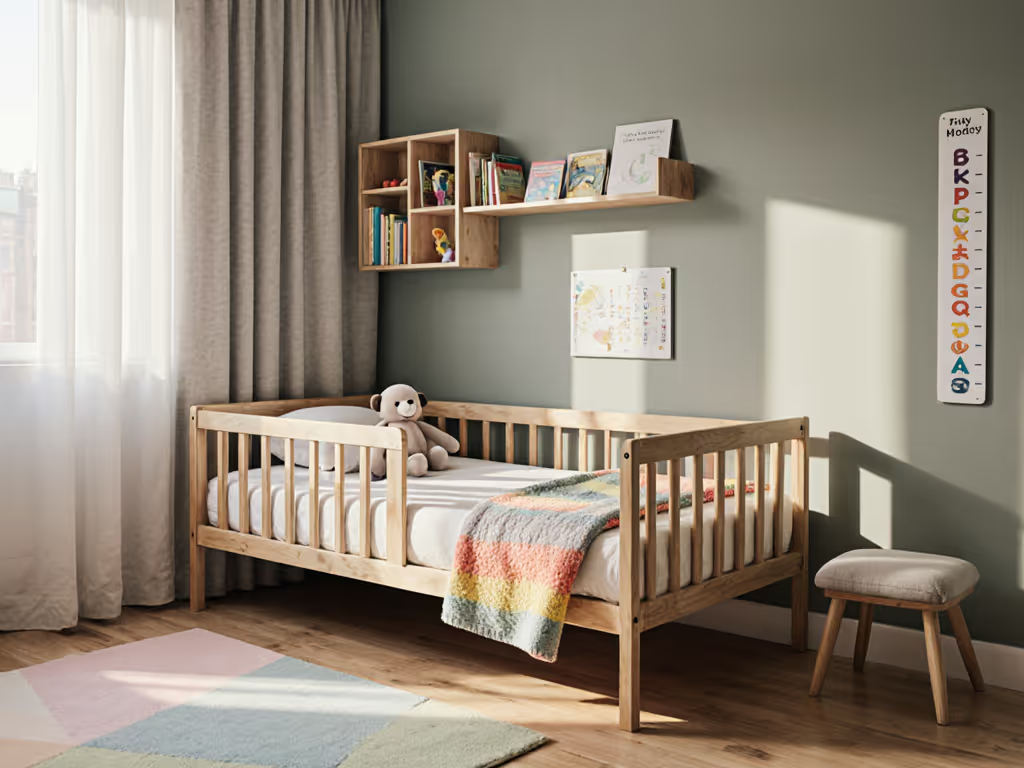
All quality toddler beds sit low (typically about 21 cm above floor), plus a 10 cm mattress, totaling about 31 cm to the surface. Premium European toddler bed comparisons often reveal minimal difference here; the range is standardized. What differs is guardrail design.
Premium makers offer:
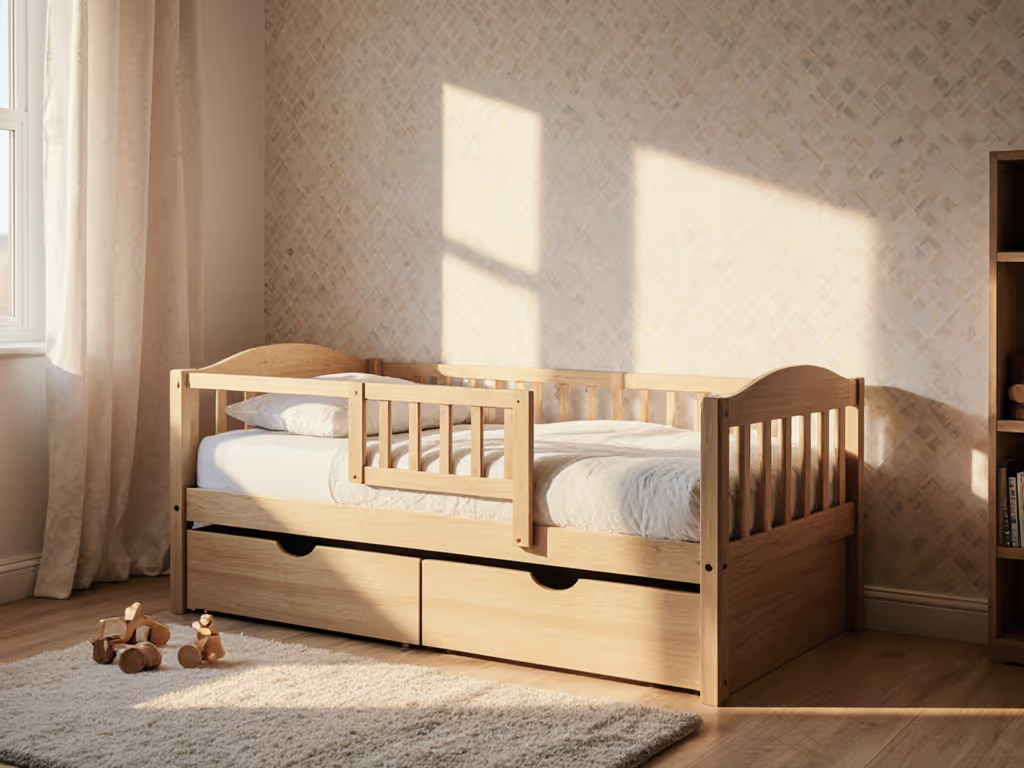
- Solid guardrails (not slats) to prevent entrapment
- Rails that extend the full length of the bed, not partial
- Hardware bolted from underneath, invisible and tamper-resistant
Mid-range European beds may skip full-length rails or use visible bolts. This is a safety hierarchy issue, and price isn't always correlated: some $450 European beds exceed safety of $700 imports.
Mattress Compatibility
European beds typically use continental or "Euro" mattress sizes (70×140cm for toddlers, 90×200cm for older), which differ slightly from UK standards. This creates a hidden cost: standard UK bedding doesn't fit. Premium makers acknowledge this and often include sourcing guides; lower-priced imports sometimes assume you'll discover the incompatibility after purchase. For sizing conversions and regulatory nuances, see our US vs EU toddler bed standards.
Storage and Space Efficiency
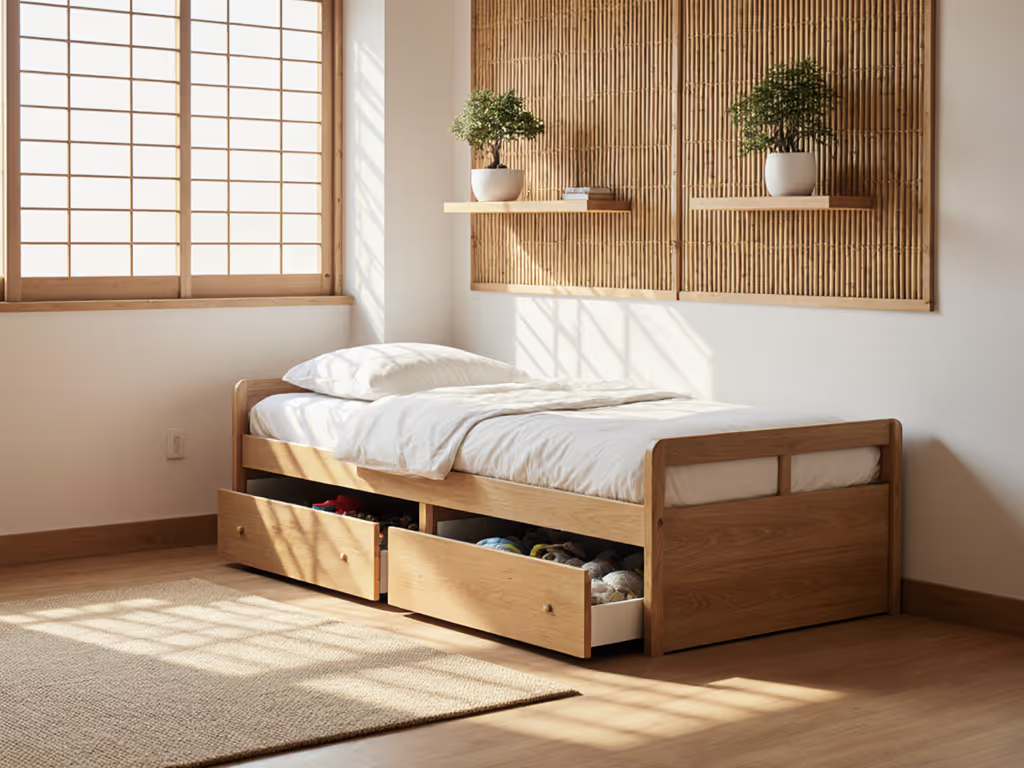
Premium European models often integrate storage (under-bed drawers, trundle options, or headboard cubbies) without adding floor footprint. This is genuine innovation for small rooms. However, mid-range and budget options sometimes offer similar storage features; the premium markup often reflects finish quality and durability of drawer mechanisms, not storage concept alone.
When Premium Justifies the Price (and When It Doesn't)
Invest in Premium If:
- You're furnishing for multiple children. A bed that lasts through three toddlers, then resells, genuinely costs less per use.
- Your space is genuinely tight. Premium European makers often lead in micro-footprint designs; the difference is measurable and worth the investment.
- You're sensitive to off-gassing or materials. European certification and VOC disclosure are real, even if they add cost. If you or your child has chemical sensitivities, premium makers' transparency is valuable.
- Noise and stability are sleep factors. A wobble-free, silent frame isn't luxury; it's functional. If creaking wakes your toddler or sibling, a solid European bed is worth it.
- Modular adaptability matters. If you plan to convert toddler-to-daybed-to-twin using the same frame, premium makers' engineering supports this. Cheap converters often require new beds at each stage.
Save Money If:
- Your budget is tight and space isn't critical. A solid mid-range toddler bed (€300-400) from a reputable EU maker often meets safety standards just as well as a €700+ option.
- You're renting or expect a short stay. A two-year horizon doesn't justify premium longevity. Prioritize function and assembly speed over craftsmanship depth.
- The room fits a standard toddler bed easily. If you don't need micro-footprint design or integrated storage, you're paying for premium aesthetics and materials, not solving a spatial problem.
- Standard finishes suffice. If water-based paint and FSC wood are nice-to-have rather than essential, mid-tier European beds deliver the same functionality without the margin.
Specific Criteria for Evaluating Premium Claims
Verify Joinery and Hardware
Ask manufacturers directly: Are joints doweled only or mortise-and-tenon? Are bolts stainless steel or plated? Can you see hardware diagrams? Premium makers answer clearly. Evasion suggests the difference is marketing.
Demand VOC and Certification Transparency
A credible premium bed should include:
- Third-party testing results (not just "low VOC" claims)
- FSC or PEFC timber certification with chain-of-custody documentation
- CE marking and compliance with EN 1130 standards (European safety for children's furniture)
If a maker uses the word "premium" but won't share this data, the premium is price alone.
Assess Tipping and Fall Risk Holistically
Evaluate the risk hierarchy: Does the bed address weight distribution, guardrail effectiveness, and edge design together? Or does it excel in one area while cutting corners elsewhere? Premium design is coherent, not patchwork. For stability checklists grounded in weight distribution and anti-tip principles, read our active toddler bed stability guide.
The Skeptical Bottom Line
Premium European toddler beds are not inherently safer than well-chosen mid-tier options. What they offer is consistency, material transparency, and longevity (real but not universal advantages). The premium price is justified when:
- You're solving a specific spatial or durability problem that cheaper options don't address
- The maker provides credible proof of engineering, materials, and testing (not anecdotes)
- The bed will serve multiple children or be resold, amortizing cost across time
- Your priorities (noise, off-gassing, modularity) align with what premium actually means in this maker's product line
A €500 bed that sits idle in a spacious room is worse value than a €300 bed solving a real floor-plan problem. European craftsmanship matters, but not more than fit, function, and your actual needs.
Further Exploration
If you're ready to narrow your search, prioritize these steps:
- Measure your space. Know the exact floor plan, door and vent clearances, and available footprint before comparing. Dimensions trump aesthetics.
- Cross-reference certifications. Don't trust brand claims alone. Verify CE markings, FSC codes, and any cited safety testing through independent channels.
- Read real-world reviews. Look for feedback on assembly difficulty, creaking, and longevity (not just design praise). Parents describe what happens at 3 a.m. better than marketers do.
- Ask about return and resale. For brand-by-brand retention data, review our toddler bed resale value analysis. A maker confident in durability offers reasonable returns and doesn't bury resale challenges. This reveals true confidence.
- Compare the full picture, not just price. Factor in mattress compatibility, delivery time, assembly labor, and expected lifespan. The cheapest isn't lowest cost; the most durable isn't always highest price.
Premium European toddler bed comparison ultimately means asking hard questions about what "premium" solves for your family. When the answer is clear (a specific safety, spatial, or durability need), the investment is defensible. When it's vague, pause and realign your priorities before paying a premium.
Related Articles